English
 Español
 tiếng việt
 русский

Highly selective for hydrogenation of nitroaromatics to corresponding anilines under mild conditions.
Exceptional thermal and chemical stability in continuous fixed-bed operation.
Low metal leaching performance, ensuring long catalyst lifetime and minimal downstream contamination.
Optimized pore structure for improved mass transfer and reduced pressure drop in industrial reactors.
Sulfur-tolerant formulation enabling robust performance in feedstocks with trace sulfur impurities.
Production of aromatic amines for polyurethane precursors (e.g., MDI intermediates).
Hydrogenation of nitrobenzene derivatives in fine chemical synthesis.
Manufacturing of corrosion inhibitors and agrochemical intermediates.
Pharmaceutical API synthesis requiring high chemo-selectivity and low heavy-metal residues.
Continuous-flow hydrogenation processes in modular and microreactor systems.
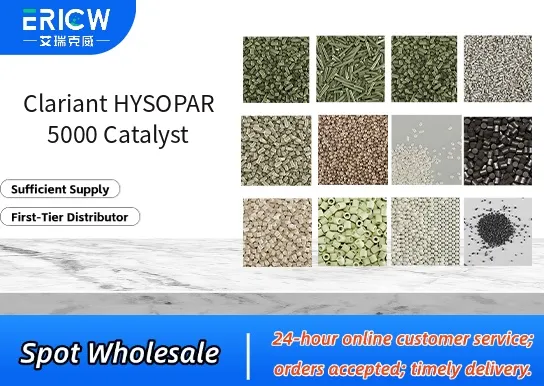
| Chemical Type | Palladium on activated carbon support |
| Product Form | Extruded cylindrical pellets (1.5–2.0 mm diameter) |
| Appearance | Black, free-flowing granular solid |
| Palladium Content | 5.0 ± 0.3 wt% |
| Bulk Density | 0.45–0.55 g/cm³ |
| Surface Area (BET) | 900–1100 m²/g |
| Primary Applications | Selective hydrogenation of nitroaromatics |
| Key Features | High activity, selectivity, and stability in gas- and liquid-phase hydrogenation |
Q1: What is the primary function of MegaMax 800 in polymer processing?
A: MegaMax 800 is a high-performance catalyst designed to accelerate crosslinking reactions—particularly in silicone and peroxide-curable elastomer systems—enhancing cure efficiency, improving scorch safety, and supporting consistent vulcanization profiles under varying processing conditions.
Q2: Is MegaMax 800 compatible with food-contact or medical-grade elastomer formulations?
A: MegaMax 800 is formulated for use in high-purity applications and has been successfully incorporated into certain food-contact and medical-grade elastomer systems; however, final regulatory compliance depends on the complete formulation, processing parameters, and end-use requirements—validation by the compounder is essential.
Q3: How should MegaMax 800 be incorporated into a rubber compound?
A: It is typically added during the final mixing stage—after heat-sensitive ingredients—to ensure uniform dispersion without premature activation. Good dispersion is critical for consistent performance, and standard internal mixers or two-roll mills are generally suitable.
Q4: Does MegaMax 800 require special storage or handling precautions?
A: Yes—it should be stored in its original sealed container at temperatures between 5 °C and 30 °C, protected from moisture, direct sunlight, and strong oxidizing agents. While not classified as highly hazardous, standard industrial hygiene practices—including gloves and dust control during handling—are recommended.
Contact With Us:
E-mail: wangxingqiang@ericwchem.com
Have a Questions? Call Us:
Add:
Building A1, Jiete Industrial Park, Huangpu District, Guangzhou City, Guangdong Province, China