English
 Español
 tiếng việt
 русский
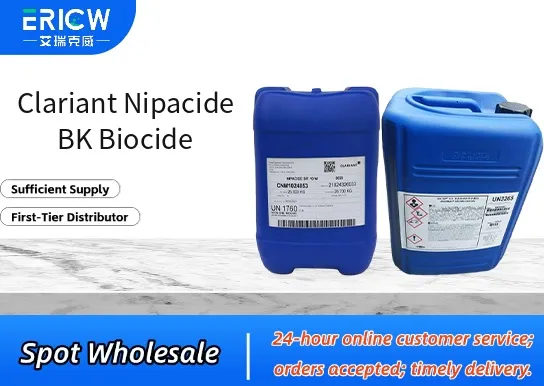
Broad-spectrum biocidal activity against bacteria, fungi, and algae.
Excellent stability in water-based systems across a wide pH range (pH 4–10).
Low foaming formulation suitable for high-shear industrial processes.
Compatible with common surfactants, thickeners, and other additives in formulated products.
Non-oxidizing chemistry enabling safe use in systems sensitive to chlorine or peroxide.
Preservation of water-based paints and coatings.
Microbial control in industrial cleaning formulations.
Protection of adhesives and sealants during storage and application.
Stabilization of polymer emulsions and latex systems.
Biostatic protection in metalworking fluids (as part of a multi-biocide strategy).
| Chemical Type | Isothiazolinone-based biocide (active: 1,2-benzisothiazolin-3-one) |
| Product Form | Liquid concentrate |
| Appearance | Clear, pale yellow liquid |
| pH (1% aqueous solution) | 6.0–8.0 |
| Solubility | Miscible with water and polar organic solvents |
| Storage Stability | ≥24 months at 5–25°C in original sealed container |
| Primary Applications | Preservative for water-based industrial formulations |
| Key Features | Non-volatile, low odor, REACH registered |
Q1: What is the primary mode of action of Nipacide BK Biocide?
A: Nipacide BK Biocide functions as a broad-spectrum preservative through disruption of microbial cell membranes and interference with essential metabolic processes, effectively controlling bacteria, yeasts, and molds in water-based systems.
Q2: In which types of industrial formulations is Nipacide BK commonly used?
A: It is widely applied in water-based paints and coatings, adhesives, construction chemicals, metalworking fluids, and cleaning concentrates—particularly where long-term microbial stability and low-odor performance are required.
Q3: Is Nipacide BK compatible with common thickeners and surfactants?
A: Yes, Nipacide BK demonstrates good compatibility with associative and non-associative thickeners, anionic and non-ionic surfactants, and most common formulation additives—though compatibility testing under actual use conditions is recommended.
Q4: How should Nipacide BK be added during manufacturing?
A: It is typically added during the cool-down phase or post-emulsification stage to minimize thermal degradation and ensure uniform distribution. Pre-dilution with water or a compatible solvent may aid dispersion in viscous systems.
Q5: Does Nipacide BK require pH adjustment for optimal performance?
A: While it remains effective across a broad pH range (approximately 4–10), maximum stability and antimicrobial efficacy are generally observed in mildly acidic to neutral formulations; significant alkalinity may accelerate hydrolysis over time.
Contact With Us:
E-mail: wangxingqiang@ericwchem.com
Have a Questions? Call Us:
Add:
Building A1, Jiete Industrial Park, Huangpu District, Guangzhou City, Guangdong Province, China