English
 Español
 tiếng việt
 русский
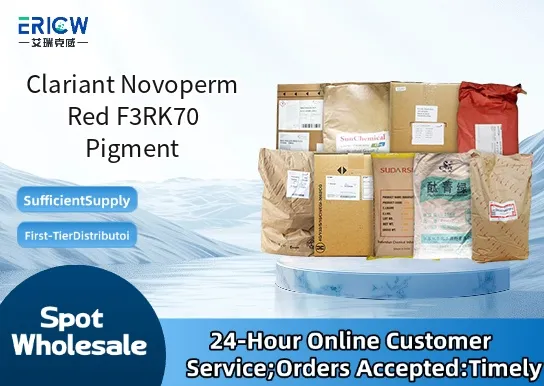
High chroma and excellent color strength for vibrant, clean red shades.
Outstanding thermal stability suitable for high-temperature processing up to 280 °C.
Good lightfastness and weather resistance in demanding outdoor applications.
Excellent dispersibility in both polar and non-polar polymer systems.
Low volatility and minimal plate-out tendency during extrusion and injection molding.
Polyolefin masterbatches (PP, PE) for automotive interior parts.
Engineering plastics including ABS, PS, and PC for consumer electronics housings.
Flexible and rigid PVC compounds for building & construction profiles.
Thermoplastic elastomers (TPE) used in medical device components and seals.
Industrial coatings requiring high-gloss, durable red pigmentation.
| Chemical Type | Condensed Azo Pigment (C.I. Pigment Red 170) |
| Product Form | Free-flowing powder |
| Appearance | Red to reddish-brown fine powder |
| Primary Applications | Plastics, masterbatches, industrial coatings |
| Key Features | Thermal stability, dispersion performance, color consistency |
| Benefits | Reduced processing defects, high batch-to-batch reproducibility |
| Recommended Carrier | LDPE or EVA for masterbatch formulation |
| Storage Conditions | Store in cool, dry place; avoid direct sunlight and moisture |
Q1: What is the primary chemical class of Novoperm Red F3RK70?
A: Novoperm Red F3RK70 is a high-performance perylene-based organic pigment, known for its excellent thermal stability, lightfastness, and resistance to migration in demanding polymer applications.
Q2: In which polymer systems is this pigment most commonly used?
A: It is widely employed in engineering thermoplastics such as polyamide (PA), polybutylene terephthalate (PBT), and polyethylene terephthalate (PET), particularly where high processing temperatures and long-term color stability are required.
Q3: Is Novoperm Red F3RK70 suitable for food-contact applications?
A: While not pre-approved for all food-contact regulations by default, it may be formulated into compliant compounds when used with appropriate carrier resins and under strict process controls—final regulatory compliance must be verified per regional requirements and end-use conditions.
Q4: How does this pigment perform under high-temperature processing?
A: It exhibits outstanding thermal stability, maintaining color integrity during melt processing at temperatures up to 300 °C and above, making it suitable for high-heat engineering plastic compounding and injection molding.
Q5: What is the typical dosage range for achieving full opacity in polymer applications?
A: Dosage depends on formulation requirements and desired shade intensity, but it is typically used at low concentrations—generally ranging from 0.1% to 2% by weight—to achieve strong tinting strength and optimal dispersion performance.
Contact With Us:
E-mail: wangxingqiang@ericwchem.com
Have a Questions? Call Us:
Add:
Building A1, Jiete Industrial Park, Huangpu District, Guangzhou City, Guangdong Province, China