English
 Español
 tiếng việt
 русский
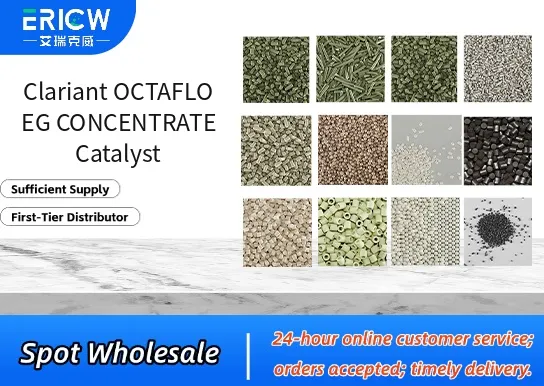
Highly selective ethylene glycol (EG) synthesis catalyst optimized for low-pressure, energy-efficient polyester intermediate production.
Enhanced thermal and hydrothermal stability ensures consistent performance over extended operating cycles in continuous fixed-bed reactors.
Low metal leaching and minimal by-product formation support stringent purity requirements for fiber-grade and bottle-grade PET applications.
Engineered for easy integration into existing EG process units with no major retrofitting or operational downtime required.
Compliant with ISO 9001 and REACH regulations, with full traceability and comprehensive technical support from Clariant’s global catalyst team.
Ethylene glycol production via catalytic hydration of ethylene oxide in large-scale petrochemical plants.
Manufacturing of polyethylene terephthalate (PET) resin for packaging, textiles, and engineering plastics.
Production of monoethylene glycol (MEG) for antifreeze formulations and heat transfer fluids.
Integrated EG/DEG/TEG co-production systems requiring high selectivity to primary glycol.
Sustainable chemical manufacturing operations targeting reduced carbon intensity and improved ESG metrics.
| Chemical Type | Supported heterogeneous acid catalyst (modified phosphoric acid system) |
| Product Form | Granular solid concentrate, free-flowing pellets |
| Appearance | Off-white to light beige cylindrical pellets |
| Primary Applications | Ethylene glycol synthesis via ethylene oxide hydration |
| Key Features | High EG selectivity (>99.5%), low diethylene glycol (DEG) co-generation |
| Benefits | Reduced downstream separation load, lower energy consumption per ton of EG produced |
| Storage Conditions | Store in dry, well-ventilated area at ambient temperature; protect from moisture |
| Handling Precautions | Use appropriate PPE; avoid inhalation of dust and contact with eyes/skin |
Q1: What is the primary function of OCTAFLO EG CONCENTRATE in ethylene glycol-based systems?
A: OCTAFLO EG CONCENTRATE is a specialized catalyst designed to enhance esterification and transesterification reactions in ethylene glycol-containing formulations—particularly in polyester synthesis and functional fluid applications—by promoting efficient and selective bond formation under controlled thermal conditions.
Q2: Is OCTAFLO EG CONCENTRATE compatible with common polymer matrices such as PET or PBT?
A: Yes—it is formulated for compatibility with glycol-rich polymer systems including PET and PBT precursors. It remains stable during melt-phase processing and does not induce premature degradation or discoloration when used within recommended process windows.
Q3: How should OCTAFLO EG CONCENTRATE be handled and stored to maintain performance?
A: Store in original sealed containers at temperatures between 5 °C and 30 °C, protected from moisture and direct sunlight. Avoid prolonged exposure to ambient humidity, as it may affect catalytic activity over time. Always follow standard industrial handling practices for reactive chemical additives.
Q4: What is the typical dosage range for OCTAFLO EG CONCENTRATE in industrial-scale processes?
A: Dosage is formulation- and process-dependent, but it is typically used at low concentrations—generally ranging from 0.1% to 2% by weight relative to the total glycol component—to achieve optimal reaction kinetics without compromising final product stability or clarity.
Contact With Us:
E-mail: wangxingqiang@ericwchem.com
Have a Questions? Call Us:
Add:
Building A1, Jiete Industrial Park, Huangpu District, Guangzhou City, Guangdong Province, China