English
 Español
 tiếng việt
 русский
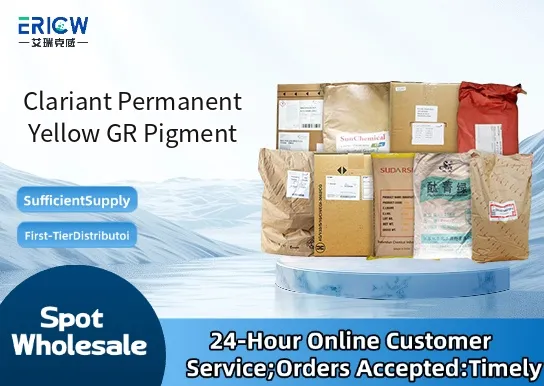
Excellent lightfastness and weather resistance for long-term color stability.
High tinctorial strength with clean, bright yellow hue suitable for demanding color systems.
Good thermal stability up to 200 °C, enabling compatibility with high-temperature processing.
Outstanding dispersibility in both polar and non-polar media, including acrylics, polyolefins, and PVC.
Compliant with major global regulatory frameworks including REACH and FDA 21 CFR for selected applications.
Automotive coatings requiring durable, fade-resistant yellow shades.
Engineering plastics such as ABS, PS, and polyesters for interior and exterior components.
Industrial maintenance coatings exposed to UV radiation and harsh environmental conditions.
Packaging inks for food-contact compliant flexible films and rigid containers.
Masterbatches for injection-molded consumer goods and construction materials.
| Chemical Type | Azo pigment (disazo) |
| Product Form | Free-flowing powder |
| Appearance | Bright greenish-yellow powder |
| Primary Applications | Plastics, coatings, inks |
| Key Features | High opacity, good migration resistance |
| Benefits | Consistent batch-to-batch color performance and processing reliability |
| Regulatory Status | REACH registered; compliant with EU Directive 2002/72/EC for plastics in food contact |
| Storage Conditions | Store in a cool, dry place below 30 °C; protect from moisture and direct sunlight |
Q1: What is the primary chemical class of Clariant Permanent Yellow GR Pigment?
A: Clariant Permanent Yellow GR is an organic pigment based on the monoazo pyridone chemical structure, offering a balanced combination of chromatic strength, lightfastness, and thermal stability.
Q2: Is this pigment suitable for use in food-contact plastics?
A: Yes — Permanent Yellow GR is approved for selected food-contact applications in plastics under relevant global regulatory frameworks, subject to compliance with applicable local requirements and recommended usage levels.
Q3: How does its heat stability compare to other yellow pigments in polyolefin processing?
A: Permanent Yellow GR exhibits excellent thermal stability, typically withstanding temperatures up to 280–300 °C for short residence times, making it well-suited for demanding polyolefin applications such as injection molding and extrusion.
Q4: What dispersion methods are recommended for optimal color development?
A: For best results, high-shear dispersion using twin-screw extruders or bead mills is recommended. Pre-dispersed masterbatches are also widely used to ensure consistent distribution and minimize dust handling.
Q5: Can it be combined with other pigments to achieve custom yellow shades?
A: Yes — Permanent Yellow GR demonstrates good compatibility with a broad range of organic and inorganic pigments, enabling formulation flexibility for hue adjustment and shade matching in polymer systems.
Contact With Us:
E-mail: wangxingqiang@ericwchem.com
Have a Questions? Call Us:
Add:
Building A1, Jiete Industrial Park, Huangpu District, Guangzhou City, Guangdong Province, China