English
 Español
 tiếng việt
 русский
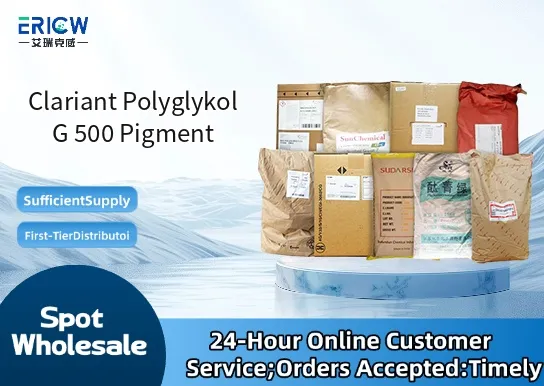
Highly effective pigment dispersant for aqueous and solvent-based systems.
Excellent wetting and stabilization performance for inorganic and organic pigments.
Low foaming characteristics, supporting stable processing in high-shear applications.
Good compatibility with common acrylic, polyester, and alkyd resin systems.
Non-ionic nature ensures broad formulation flexibility and reduced sensitivity to electrolytes.
Architectural and industrial waterborne paints.
Automotive basecoat and clearcoat formulations.
Printing inks for packaging and publication gravure and flexo applications.
Plastic color concentrates (masterbatches) for polyolefins and PVC.
Wood coatings requiring high gloss and pigment clarity.
| Chemical Type | Polyglycol-based non-ionic dispersant |
| Product Form | Clear to slightly hazy viscous liquid |
| Appearance | Light yellow to pale amber liquid |
| Primary Applications | Pigment dispersion in coatings, inks, and plastics |
| Key Features | Wetting, stabilization, low foam, electrolyte tolerance |
| Recommended Dosage | 10–30% w/w on pigment solids |
| pH (10% aqueous solution) | 5.0–7.0 |
| Storage Conditions | Store in original container at 10–30°C; protect from freezing |
Q1: What is the primary function of Clariant Polyglykol G 500 Pigment in formulations?
A: Clariant Polyglykol G 500 Pigment is a pigment preparation based on polyglycol technology, designed to provide stable coloration and enhanced dispersion performance in polar polymer systems—particularly in polyurethanes, polyesters, and water-based coatings. It combines pigment functionality with inherent compatibility and wetting assistance.
Q2: Is this product suitable for use in food-contact or pharmaceutical applications?
A: Clariant Polyglykol G 500 Pigment is not specifically developed or certified for direct food-contact or pharmaceutical use. Its suitability for regulated applications must be evaluated case-by-case, including full regulatory review of the final formulation and compliance with applicable local and regional requirements.
Q3: How should Polyglykol G 500 Pigment be incorporated into a polymer system?
A: It is typically added during the melt compounding or mixing stage, and benefits from moderate shear and elevated temperature to ensure uniform distribution. Pre-dispersion in a compatible carrier liquid or resin may further improve homogeneity, especially in high-viscosity systems.
Q4: Does this pigment require additional dispersing agents or stabilizers?
A: Due to its integrated polyglycol-based dispersant architecture, Clariant Polyglykol G 500 Pigment generally reduces or eliminates the need for supplemental dispersants in many standard formulations—though optimal performance may still depend on matrix polarity, processing conditions, and target color strength.
Q5: What are the recommended storage conditions?
A: Store in original sealed containers in a cool, dry place away from direct sunlight and sources of heat or moisture. Prolonged exposure to high humidity or temperature fluctuations may affect handling consistency and dispersion behavior.
Contact With Us:
E-mail: wangxingqiang@ericwchem.com
Have a Questions? Call Us:
Add:
Building A1, Jiete Industrial Park, Huangpu District, Guangzhou City, Guangdong Province, China