English
 Español
 tiếng việt
 русский
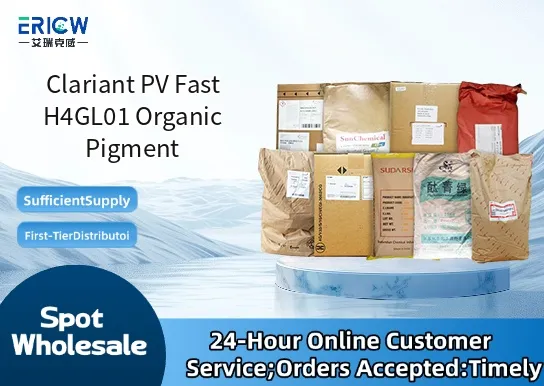
Excellent heat stability up to 220 °C for demanding processing conditions.
High tinctorial strength and clean, bright magenta shade with superior chroma.
Outstanding lightfastness (ISO 105-B02: Grade 7–8) and weather resistance in outdoor applications.
Good dispersibility in both solvent-based and water-based systems without requiring high-shear dispersion.
Low migration tendency, ensuring color integrity in PVC, polyolefins, and flexible packaging films.
Polyvinyl chloride (PVC) profiles, flooring, and wire & cable sheathing.
Polyolefin masterbatches for injection-molded consumer goods and automotive interior components.
Flexible packaging films including laminated pouches and shrink sleeves.
Water-based and solvent-based industrial coatings for metal and plastic substrates.
High-performance inks for gravure and flexographic printing on food-contact packaging.
| Chemical Type | Quinacridone derivative |
| Product Form | Fine powder, free-flowing |
| Appearance | Bright magenta powder |
| Primary Applications | PVC, polyolefins, flexible packaging, industrial coatings, packaging inks |
| Key Features | Heat stable, low migration, high chroma, excellent lightfastness |
| Benefits | Consistent color performance, reduced formulation complexity, compliance with food-contact regulations (EU 10/2011, FDA 21 CFR) |
| Particle Size (D50) | Approx. 0.08–0.12 µm |
| Volatile Matter (105 °C, 2 h) | ≤ 1.0 wt% |
Q1: What is the primary chemical class and typical hue profile of PV Fast H4GL01?
A: PV Fast H4GL01 is a high-performance perylene-based organic pigment, offering a clean, bluish red shade with excellent chroma and strong tinting strength. Its molecular structure contributes to superior lightfastness and thermal stability compared to conventional azo pigments.
Q2: In which polymer systems is PV Fast H4GL01 most commonly processed, and what are key processing considerations?
A: It is widely used in engineering thermoplastics such as polyolefins (PP, PE), PET, and polycarbonate, especially where high-temperature stability during extrusion or injection molding is required. Good dispersion is critical—pre-dispersed concentrates or optimized masterbatch protocols are recommended to ensure uniform color development and avoid pigment degradation.
Q3: How does PV Fast H4GL01 perform under outdoor exposure and UV irradiation?
A: As a perylene derivative, it delivers outstanding resistance to UV radiation and weathering, making it suitable for demanding outdoor applications. Its lightfastness and chalk resistance significantly exceed those of standard red organic pigments, particularly in unpigmented or lightly stabilized polymer matrices.
Q4: Is PV Fast H4GL01 suitable for food-contact or regulated consumer goods applications?
A: PV Fast H4GL01 is not pre-approved for direct food-contact applications under major global regulatory frameworks. Its use in consumer-facing products requires full formulation-level compliance assessment—including migration testing and regulatory review—based on the final article’s intended use, temperature conditions, and contact type.
Q5: What is the typical dosage range when using PV Fast H4GL01 in polymer coloration?
A: Dosage depends on the desired shade intensity, polymer matrix, and processing method, but it is generally effective at low concentrations—typically ranging from 0.1% to 2% by weight in final compounds. Its high tinctorial strength allows economical usage while maintaining excellent opacity and color consistency.
Contact With Us:
E-mail: wangxingqiang@ericwchem.com
Have a Questions? Call Us:
Add:
Building A1, Jiete Industrial Park, Huangpu District, Guangzhou City, Guangdong Province, China