English
 Español
 tiếng việt
 русский
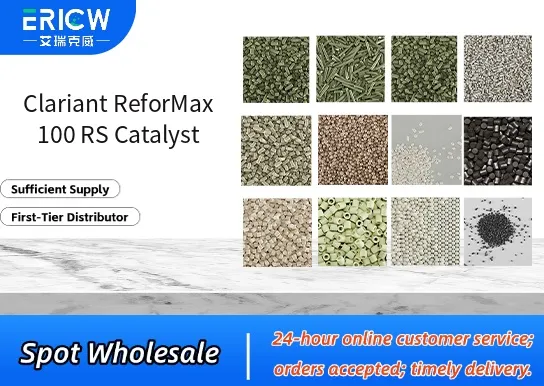
Highly selective for reforming reactions under low-pressure and low-severity conditions.
Enhanced resistance to sulfur poisoning and coke deposition during extended operation.
Optimized metal dispersion and acid site balance for improved liquid yield and aromatic selectivity.
Robust thermal and hydrothermal stability, ensuring consistent performance across regeneration cycles.
Designed for easy handling and safe catalyst loading with controlled dust generation.
Continuous catalytic reforming (CCR) of naphtha feedstocks in refinery units.
Production of high-octane reformate for gasoline blending.
Aromatic-rich feed preparation for petrochemical downstream units (e.g., BTX extraction).
Upgrading light straight-run (LSR) and hydrotreated naphthas with variable sulfur content.
Refinery revamp projects requiring higher throughput and improved product quality.
| Chemical Type | Platinum–rhenium on alumina-based support with tailored acidity |
| Product Form | Extrudates (cylindrical pellets) |
| Appearance | Gray-black cylindrical particles, free-flowing granular solid |
| Primary Applications | Catalytic reforming of naphtha in semi-regenerative and continuous regeneration units |
| Key Features | Low platinum loading, optimized Re/Pt ratio, controlled acid site density |
| Benefits | Improved C5+ liquid yield, reduced hydrogen consumption, extended cycle length |
| Storage Conditions | Store in original sealed packaging at ambient temperature; protect from moisture and contamination |
Q1: What is the primary function of ReforMax 100 RS in polyolefin processing?
A: ReforMax 100 RS is a highly efficient peroxide-based catalyst designed to promote controlled rheology modification—specifically, chain scission—of polypropylene and other polyolefins during extrusion or compounding. It enables targeted reduction in melt viscosity while supporting improved processability and enhanced mechanical balance in final products.
Q2: How does ReforMax 100 RS differ from conventional peroxide catalysts in terms of thermal stability?
A: ReforMax 100 RS features an optimized molecular structure that provides superior thermal latency compared to many standard peroxides. This allows for better handling during high-shear compounding and greater consistency in decomposition onset, reducing premature degradation risk and supporting tighter control over molecular weight distribution.
Q3: Is ReforMax 100 RS compatible with common polypropylene stabilizer systems?
A: Yes—ReforMax 100 RS has been formulated for compatibility with widely used phenolic antioxidants, phosphites, and hindered amine light stabilizers (HALS) in PP applications. However, optimal stabilization performance should be confirmed through application-specific testing, as interactions may vary depending on formulation complexity and processing conditions.
Q4: What are typical dosage guidelines for ReforMax 100 RS in PP homopolymer applications?
A: Dosage is formulation- and performance-dependent, but ReforMax 100 RS is typically used at low concentrations—generally ranging from 0.1% to 2% by weight of the base polymer—to achieve desired melt flow rate (MFR) increases without excessive embrittlement. Precise levels should be determined via small-scale trials under representative processing conditions.
Contact With Us:
E-mail: wangxingqiang@ericwchem.com
Have a Questions? Call Us:
Add:
Building A1, Jiete Industrial Park, Huangpu District, Guangzhou City, Guangdong Province, China