English
 Español
 tiếng việt
 русский
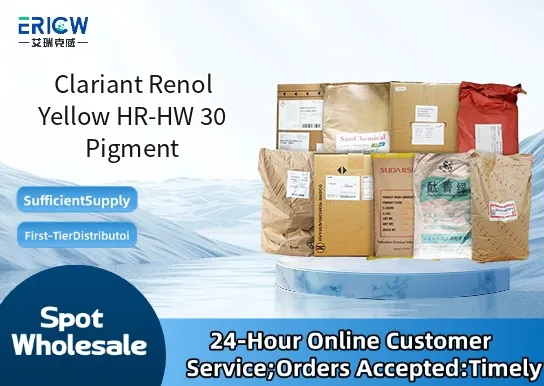
High thermal stability suitable for demanding processing conditions up to 300 °C.
Excellent lightfastness and weather resistance, meeting ISO 105-B02 and ISO 105-A02 standards.
Good dispersibility in both polar and non-polar polymer matrices.
Low migration tendency in PVC, polyolefins, and engineering thermoplastics.
Compliant with major global regulatory frameworks including REACH, RoHS, and FDA 21 CFR 178.3297 (for indirect food contact).
Coloration of rigid and flexible PVC for building profiles, cables, and flooring.
Masterbatch formulation for polypropylene (PP) and polyethylene (PE) packaging films.
Engineering plastics including ABS, PS, and PC for automotive interior components.
Thermoplastic elastomers (TPE) used in consumer goods and medical device housings.
Industrial coatings requiring long-term outdoor durability and color consistency.
| Chemical Type | Azo pigment (Benzimidazolone derivative) |
| Product Form | Free-flowing powder |
| Appearance | Yellow to orange-yellow powder |
| Primary Applications | PVC, polyolefins, engineering plastics, TPEs, industrial coatings |
| Key Features | High thermal stability, low migration, excellent dispersion, UV resistance |
| Benefits | Consistent batch-to-batch color, reduced processing defects, extended product service life |
| Regulatory Status | REACH registered, RoHS compliant, non-hazardous per GHS classification |
Q1: What is the primary application field for Renol Yellow HR-HW 30?
A: Renol Yellow HR-HW 30 is specifically developed for high-performance coloration of polyolefins—especially injection-molded and extruded parts requiring excellent thermal stability, low volatility, and good dispersion behavior.
Q2: Is this pigment suitable for food-contact applications?
A: Renol Yellow HR-HW 30 is designed to meet relevant global regulatory expectations for indirect food contact in polyolefin packaging and containers, subject to final formulation validation and compliance with applicable local requirements.
Q3: How does HR-HW 30 perform under high-temperature processing conditions?
A: This pigment demonstrates robust thermal stability during typical polyolefin processing—such as injection molding and extrusion—at temperatures up to 280 °C, with minimal color shift or degradation when properly dispersed.
Q4: What is the recommended dosage range for optimal performance?
A: Dosage depends on the desired shade strength and substrate characteristics, but it is typically used at low concentrations—generally ranging from 0.1% to 2% by weight in polyolefin matrices—to achieve strong yellow hues with good opacity and consistency.
Q5: Does HR-HW 30 require special handling or pre-treatment before compounding?
A: No pre-treatment is required. The pigment is supplied in a free-flowing, dust-reduced form optimized for direct feeding into standard compounding equipment; however, good dispersion practices—including appropriate screw design and melt temperature control—are recommended for best results.
Contact With Us:
E-mail: wangxingqiang@ericwchem.com
Have a Questions? Call Us:
Add:
Building A1, Jiete Industrial Park, Huangpu District, Guangzhou City, Guangdong Province, China