English
 Español
 tiếng việt
 русский
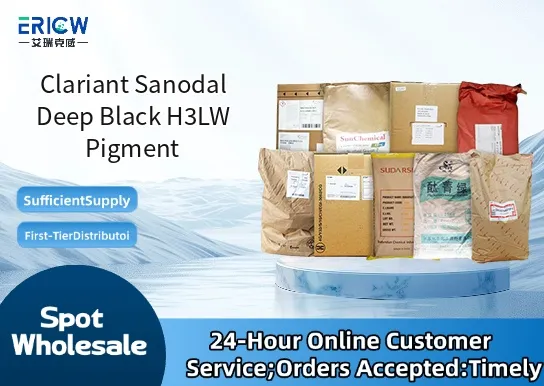
Exceptional lightfastness and weather resistance for long-term color stability.
High tinctorial strength enabling efficient black shade development with low dosage.
Excellent dispersion stability in aqueous and solvent-based systems.
Low heavy metal content, compliant with major global regulatory frameworks including REACH.
Optimized particle size distribution for enhanced gloss and uniformity in finished coatings.
Automotive OEM and refinish coatings.
Industrial maintenance and coil coatings.
Architectural exterior wall paints and façade systems.
Plastic coloration for engineering thermoplastics (e.g., ABS, PC/ABS).
High-performance printing inks for packaging and labeling.
| Chemical Type | Complex inorganic colored pigment (CICP), iron oxide–chromium oxide based |
| Product Form | Free-flowing dry powder |
| Appearance | Deep matte black powder |
| Primary Applications | Coatings, plastics, inks |
| Key Features | Non-bleeding, UV-stable, non-migrating |
| Benefits | Reduced formulation complexity, improved batch-to-batch consistency |
| Recommended Dispersant | Anionic polyacrylate dispersants or phosphate ester surfactants |
| Storage Conditions | Store in original sealed container at 5–30 °C, protect from moisture |
Q1: What is the primary application field for Sanodal Deep Black H3LW?
A: Sanodal Deep Black H3LW is specifically developed for high-performance black coloration in anodized aluminum surfaces, particularly in architectural and industrial anodizing processes where deep, uniform, and lightfast black shades are required.
Q2: Is this pigment compatible with standard sulfuric acid anodizing electrolytes?
A: Yes, Sanodal Deep Black H3LW is formulated for compatibility with conventional sulfuric acid-based anodizing baths and is designed to integrate smoothly into existing coloring lines without requiring major process modifications.
Q3: How does Sanodal Deep Black H3LW differ from conventional organic black dyes?
A: Unlike many organic black dyes, Sanodal Deep Black H3LW offers enhanced UV stability and superior resistance to fading under outdoor exposure, delivering longer-lasting black appearance on anodized aluminum substrates.
Q4: What is the typical dosage range during the anodizing coloration step?
A: Dosage depends on bath conditions and desired shade depth, but it is generally used at low concentrations—typically ranging from 0.1% to 2% by weight relative to the total bath volume—and optimized via small-scale trials.
Contact With Us:
E-mail: wangxingqiang@ericwchem.com
Have a Questions? Call Us:
Add:
Building A1, Jiete Industrial Park, Huangpu District, Guangzhou City, Guangdong Province, China