English
 Español
 tiếng việt
 русский
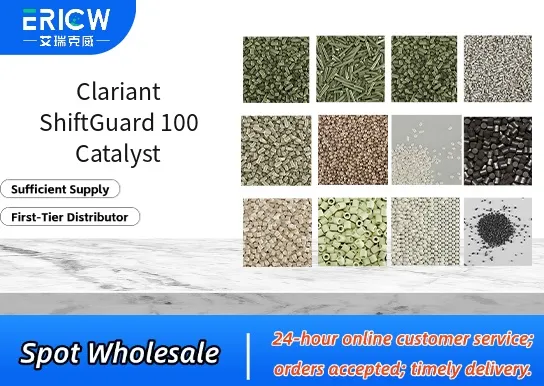
Highly selective low-temperature water-gas shift (WGS) catalyst optimized for hydrogen-rich syngas purification.
Robust sulfur tolerance enabling stable operation in feedstreams with trace H₂S impurities.
Enhanced thermal stability and resistance to sintering under dynamic load-following conditions.
Low pressure drop design suitable for both fixed-bed and modular reactor configurations.
Pre-sulfided formulation eliminates need for on-site sulfidation, reducing commissioning time and safety risk.
Hydrogen production units in refineries and petrochemical plants.
On-purpose hydrogen facilities utilizing steam methane reforming (SMR) or autothermal reforming (ATR).
Carbon capture and utilization (CCU) integrated syngas processing trains.
Fuel cell-grade hydrogen purification systems requiring ultra-low CO content (< 10 ppm).
Ammonia synthesis gas conditioning where precise CO/CO₂ ratio control is critical.
| Chemical Type | Cu–Zn–Al oxide-based, pre-sulfided |
| Product Form | Extrudates (cylindrical pellets, 3–4 mm diameter) |
| Appearance | Black to dark gray solid granules |
| Primary Applications | Low-temperature water-gas shift (LT-WGS) reaction |
| Operating Temperature Range | 180–260 °C |
| Key Features | High CO conversion at low temperature, sulfur-tolerant, pre-activated |
| Benefits | Reduced reactor footprint, lower energy consumption, simplified start-up |
| Storage Requirement | Keep sealed under inert atmosphere; protect from moisture and air exposure |
Q1: What is the primary function of ShiftGuard 100 in polyurethane systems?
A: ShiftGuard 100 is a selective, low-odor amine-based catalyst designed to promote the urethane reaction (isocyanate–polyol coupling) while minimizing side reactions such as trimerization or excessive blowing. It enables precise control over gel time and cure profile in flexible and semi-rigid foam formulations.
Q2: How does ShiftGuard 100 compare to traditional tertiary amine catalysts in terms of odor and volatility?
A: ShiftGuard 100 is formulated to offer significantly reduced volatility and lower perceived odor compared to conventional aliphatic tertiary amines. Its molecular design enhances compatibility with polyol blends and reduces post-cure emissions, supporting improved workplace air quality and finished product acceptability.
Q3: Is ShiftGuard 100 compatible with water-blown and low-VOC polyurethane systems?
A: Yes — ShiftGuard 100 demonstrates good stability and performance in water-blown, low-VOC, and high-solids polyurethane systems. It maintains catalytic efficiency without compromising foam uniformity or physical properties, making it suitable for evolving sustainability-focused formulations.
Q4: What is the typical dosage range for ShiftGuard 100 in standard flexible slabstock foam?
A: Dosage is formulation-dependent, but ShiftGuard 100 is typically used at low concentrations — generally ranging from 0.1% to 2% by weight relative to the total polyol charge. Optimal levels should be determined through lab-scale trials to balance reactivity, cell structure, and processing window.
Contact With Us:
E-mail: wangxingqiang@ericwchem.com
Have a Questions? Call Us:
Add:
Building A1, Jiete Industrial Park, Huangpu District, Guangzhou City, Guangdong Province, China