English
 Español
 tiếng việt
 русский
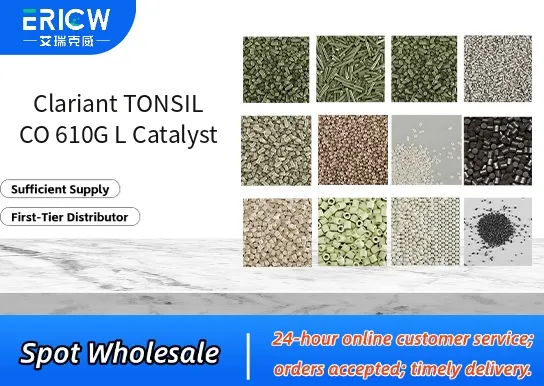
Highly selective acidic catalyst for controlled condensation and esterification reactions.
Thermally stable up to 220 °C, enabling robust performance in elevated-temperature processes.
Low metal content ensures minimal product discoloration and reduced downstream purification burden.
Free-flowing granular form facilitates accurate dosing and seamless integration into continuous production lines.
Non-corrosive to standard stainless-steel equipment, supporting extended reactor service life.
Production of polyester resins for coatings and adhesives.
Esterification of bio-based fatty acids in sustainable plasticizer synthesis.
Condensation polymerization in unsaturated polyester (UPR) manufacturing.
Catalysis of transesterification reactions for high-clarity polycarbonate precursors.
Acid-catalyzed dehydration steps in specialty fragrance and pharmaceutical intermediate synthesis.
| Chemical Type | Solid acidic clay-based catalyst |
| Product Form | Free-flowing granules |
| Appearance | Light beige to pale brown granules |
| Primary Applications | Esterification, condensation, transesterification |
| Key Features | Thermal stability, low leaching, non-corrosive |
| Benefits | Reduced side reactions, simplified workup, equipment compatibility |
| Storage Conditions | Store in dry, well-ventilated area at ambient temperature |
| Handling Precautions | Use appropriate PPE; avoid inhalation of dust |
Q1: What is the primary function of TONSIL CO 610G L in polymer processing?
A: TONSIL CO 610G L is a highly active, low-ash clay-based catalyst designed to promote controlled crosslinking and condensation reactions—particularly in silicone rubber and specialty elastomer formulations—enhancing cure efficiency and final mechanical performance.
Q2: Is TONSIL CO 610G L compatible with platinum-cure or peroxide-cure systems?
A: It is specifically formulated for use in condensation-cure (acetoxy- or alkoxy-based) silicone systems and is not intended as a replacement for platinum or peroxide initiators. Compatibility with other catalysts should be verified experimentally due to potential interference.
Q3: How should TONSIL CO 610G L be incorporated into a formulation?
A: It is typically added during the mixing stage under controlled shear and temperature conditions to ensure uniform dispersion. Pre-dispersion in a carrier fluid or polymer base may improve handling and consistency in high-viscosity systems.
Q4: Does this catalyst require special storage or handling precautions?
A: Yes—it should be stored in a cool, dry place in original sealed packaging to prevent moisture uptake. Handling requires standard industrial hygiene practices, including dust control and appropriate PPE, as with fine mineral powders.
Contact With Us:
E-mail: wangxingqiang@ericwchem.com
Have a Questions? Call Us:
Add:
Building A1, Jiete Industrial Park, Huangpu District, Guangzhou City, Guangdong Province, China