English
 Español
 tiếng việt
 русский
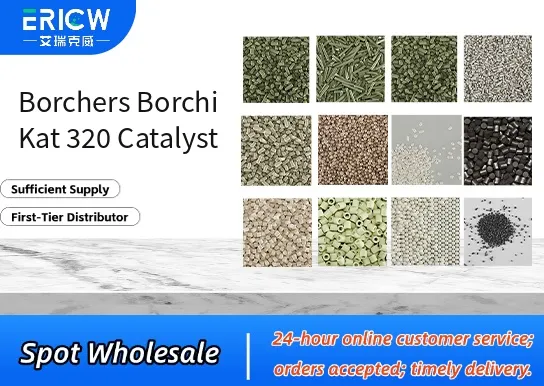
Highly selective cobalt-based homogeneous catalyst for controlled oxidation reactions.
Excellent thermal stability up to 120 °C under standard process conditions.
Low metal loading requirement—effective at concentrations as low as 50–200 ppm Co.
Compatible with common industrial solvents including acetic acid, water, and aliphatic ketones.
Non-corrosive formulation minimizes equipment degradation and extends reactor service life.
Production of terephthalic acid (TPA) via p-xylene oxidation.
Synthesis of isophthalic acid and other aromatic dicarboxylic acids.
Oxidation of cyclohexane to cyclohexanone/cyclohexanol (KA oil) in fine chemical manufacturing.
Catalytic upgrading of bio-derived platform chemicals in green chemistry processes.
| Chemical Type | Cobalt(II) acetate tetrahydrate-based homogeneous catalyst |
| Product Form | Free-flowing crystalline solid |
| Appearance | Rose-red to burgundy crystalline powder |
| Primary Applications | Liquid-phase aerobic oxidation of alkylaromatics and aliphatic hydrocarbons |
| Key Features | High catalytic activity, selectivity, and reproducibility in continuous oxidation processes |
| Benefits | Reduced by-product formation, improved yield consistency, and simplified catalyst recovery |
| Storage Conditions | Store in original sealed container at 15–25 °C, protected from moisture and direct sunlight |
| Handling Precautions | Use in well-ventilated areas; avoid inhalation of dust and prolonged skin contact |
Q1: What is the primary chemical function of Borchi Kat 320 in coating and ink formulations?
A: Borchi Kat 320 is a cobalt-free, heavy-metal-free oxidation catalyst designed to promote efficient air-drying of alkyd- and oil-based systems through enhanced autoxidation of unsaturated fatty acid chains. It functions as a redox-active transition metal complex that accelerates peroxide decomposition and free radical generation without contributing to VOC emissions or regulatory concerns associated with traditional driers.
Q2: Is Borchi Kat 320 compatible with water-reducible or hybrid resin systems?
A: Yes — Borchi Kat 320 demonstrates good compatibility with water-reducible alkyds, acrylic-alkyd hybrids, and certain solvent-borne polyurethane-modified systems. Its organometallic structure provides stability in mildly polar media, though performance should be verified in the final formulation due to sensitivity to pH, ionic content, and co-solvent selection.
Q3: How does Borchi Kat 320 compare to traditional cobalt driers in terms of drying profile?
A: Borchi Kat 320 typically delivers a more balanced drying profile — with improved through-dry and reduced surface wrinkling or oxygen inhibition — compared to cobalt-based driers. While initial set may be slightly slower than high-cobalt systems, it offers superior film integrity, yellowing resistance, and long-term oxidative stability, especially in pigmented or thick-film applications.
Q4: What is the recommended handling and storage guidance for Borchi Kat 320?
A: Store in tightly sealed original containers under cool, dry conditions away from direct sunlight and strong oxidizing agents. Avoid prolonged exposure to moisture or elevated temperatures, as this may affect catalytic activity over time. Standard industrial hygiene practices apply — use appropriate PPE when handling concentrated product, and ensure adequate ventilation during dosing.
Contact With Us:
E-mail: wangxingqiang@ericwchem.com
Have a Questions? Call Us:
Add:
Building A1, Jiete Industrial Park, Huangpu District, Guangzhou City, Guangdong Province, China