English
 Español
 tiếng việt
 русский

Highly selective low-temperature water-gas shift (WGS) catalyst optimized for hydrogen production and CO reduction.
Enhanced sulfur tolerance enabling stable operation in feed streams with trace H₂S impurities.
Robust thermal and mechanical stability under dynamic load conditions and frequent start-up/shutdown cycles.
Low pressure drop design facilitating integration into compact reactor systems and retrofit installations.
Long service life with minimal activity loss, reducing catalyst replacement frequency and operational downtime.
Hydrogen production units in refineries and petrochemical plants.
Syngas conditioning for ammonia and methanol synthesis loops.
Fuel processor systems in distributed hydrogen generation and fuel cell applications.
CO cleanup in biohydrogen and green hydrogen pathways utilizing renewable feedstocks.
Integrated gasification combined cycle (IGCC) and blue hydrogen facilities with carbon capture readiness.
| Chemical Type | Copper–zinc–alumina-based low-temperature shift catalyst |
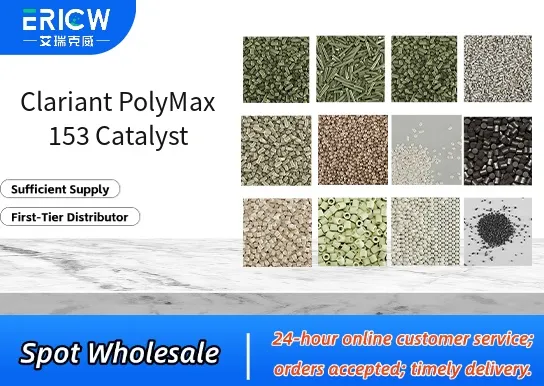
| Product Form | Extruded pellets (cylindrical, ~3–5 mm diameter) |
| Appearance | Gray to dark gray solid granules |
| Primary Applications | Low-temperature water-gas shift reaction (200–280 °C) |
| Key Features | Sulfur-tolerant, high CO conversion efficiency, low attrition |
| Benefits | Extended catalyst life, reduced operating costs, improved process reliability |
| Storage Requirement | Keep sealed under dry inert atmosphere; avoid exposure to moisture and air |
| Activation Protocol | In-situ reduction with syngas or diluted H₂ at controlled ramp rate |
Q1: What is the primary function of ShiftGuard 200 in polyurethane systems?
A: ShiftGuard 200 is a selective amine-based catalyst designed to promote urethane bond formation while suppressing undesirable side reactions such as trimerization or excessive foaming, enabling improved processing control and enhanced final product consistency.
Q2: Is ShiftGuard 200 compatible with moisture-cure and one-component PU formulations?
A: Yes, ShiftGuard 200 is formulated for compatibility with both two-component and one-component moisture-curing polyurethane systems, where it helps balance cure speed and pot life without compromising film integrity or adhesion performance.
Q3: How does ShiftGuard 200 differ from conventional tertiary amine catalysts?
A: Unlike many traditional tertiary amines, ShiftGuard 200 offers improved latency and reduced volatility, resulting in lower odor impact, better storage stability, and more predictable reactivity profiles—particularly beneficial in sensitive indoor applications and low-VOC formulations.
Q4: What is the typical dosage range for ShiftGuard 200 in standard PU coatings or adhesives?
A: Dosage is formulation-dependent, but ShiftGuard 200 is typically used at low concentrations—generally ranging from 0.1% to 2% by weight relative to the polyol component—to achieve optimal catalytic balance without over-acceleration or post-cure instability.
Contact With Us:
E-mail: wangxingqiang@ericwchem.com
Have a Questions? Call Us:
Add:
Building A1, Jiete Industrial Park, Huangpu District, Guangzhou City, Guangdong Province, China