English
 Español
 tiếng việt
 русский
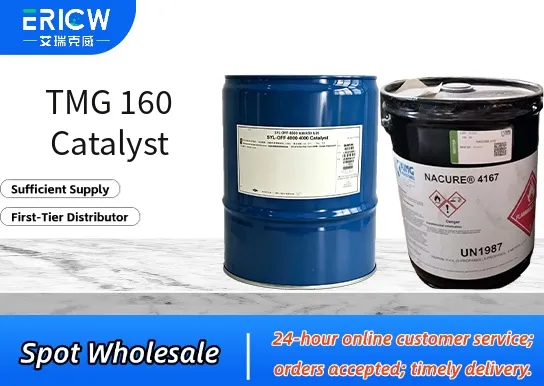
Highly selective trimethylglycine-based catalytic system for controlled esterification and transesterification reactions.
Thermally stable up to 180 °C, enabling robust performance in high-temperature continuous processes.
Low volatility and negligible leaching, ensuring long catalyst lifetime and minimal product contamination.
Water-tolerant formulation, maintaining activity in moisture-containing feedstocks without deactivation.
Eco-friendly profile: halogen-free, non-toxic, and compliant with REACH and EPA guidelines for industrial catalysts.
Biodiesel production via transesterification of vegetable oils and waste cooking oil.
Synthesis of biodegradable lubricants and specialty esters for personal care formulations.
Polymerization initiation in polyester and polyacrylate resin manufacturing.
Catalytic upgrading of fatty acid methyl esters (FAME) in renewable fuel blending streams.
Continuous-flow synthesis of pharmaceutical intermediates requiring mild, base-catalyzed condensation.
| Chemical Type | Trimethylglycine derivative (quaternary ammonium betaine) |
| Product Form | Free-flowing white to off-white granular solid |
| Appearance | Uniform granules, 1–3 mm diameter |
| Primary Applications | Esterification, transesterification, condensation catalysis |
| Key Features | Non-corrosive, heterogeneous, recyclable |
| Benefits | Reduced neutralization waste, simplified downstream separation, no metal residue |
| Storage Conditions | Store in cool, dry place below 30 °C; protect from humidity |
| Shelf Life | 24 months under recommended storage conditions |
Q1: What is TMG 160 Catalyst primarily used for?
A: TMG 160 Catalyst is a tertiary amine-based catalyst specifically formulated to promote the gelling and curing reactions in polyurethane systems, particularly in rigid and semi-rigid foam applications where balanced reactivity and flow control are required.
Q2: How does TMG 160 differ from other amine catalysts like DABCO or BDMAEE?
A: TMG 160 offers a distinct balance of delayed initial reactivity and strong gel-promoting activity, resulting in improved cream time and finer cell structure compared to highly reactive catalysts. Its molecular design provides enhanced compatibility with common polyol blends and reduced volatility-related handling concerns.
Q3: Is TMG 160 suitable for low-emission or low-VOC formulations?
A: Yes — TMG 160 is designed with low volatility and minimal residual odor, making it well-suited for formulations targeting reduced emissions. It contributes to lower post-cure VOC profiles without compromising catalytic efficiency in standard processing conditions.
Q4: What is the typical dosage range for TMG 160 in polyurethane foam systems?
A: Dosage depends on formulation requirements and desired processing window, but it is typically used at low concentrations — generally ranging from 0.1% to 2% by weight relative to the total polyol component — and is often blended with other catalysts to fine-tune rise and cure profiles.
Q5: Can TMG 160 be used in moisture-cure or one-component PU sealants?
A: While TMG 160 is primarily optimized for two-component rigid foam systems, it may be evaluated in certain one-component moisture-cure formulations where controlled gelation and extended shelf life are beneficial — however, compatibility and performance must be verified experimentally under end-use conditions.
Contact With Us:
E-mail: wangxingqiang@ericwchem.com
Have a Questions? Call Us:
Add:
Building A1, Jiete Industrial Park, Huangpu District, Guangzhou City, Guangdong Province, China