English
 Español
 tiếng việt
 русский
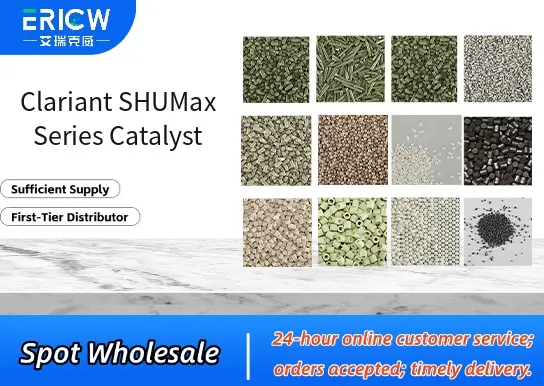
Highly selective for hydrogenation of unsaturated aldehydes to unsaturated alcohols, minimizing over-hydrogenation.
Thermally stable under continuous industrial operation up to 180 °C in fixed-bed reactors.
Low metal leaching performance ensures long catalyst lifetime and consistent product purity.
Engineered with tailored pore structure for improved mass transfer and reduced pressure drop.
Available in multiple formulations optimized for varying feedstock compositions and process conditions.
Production of cinnamyl alcohol from cinnamaldehyde in fragrance intermediates manufacturing.
Selective hydrogenation of citral to geraniol and nerol for high-value aroma chemicals.
Conversion of crotonaldehyde to crotyl alcohol in pharmaceutical intermediate synthesis.
Processing of α,β-unsaturated carbonyls in fine chemical and agrochemical active ingredient production.
| Chemical Type | Supported noble metal catalyst (Pd or Pt-based) |
| Product Form | Extrudates or spherical pellets |
| Appearance | Gray to black free-flowing solid |
| Primary Applications | Selective hydrogenation of α,β-unsaturated aldehydes |
| Key Features | High chemoselectivity, thermal stability, low sintering tendency |
| Benefits | Extended cycle life, reduced catalyst consumption, improved batch consistency |
| Recommended Operating Range | 80–180 °C, 1–30 bar H₂ |
| Storage Conditions | Store in sealed container under inert atmosphere; avoid moisture and air exposure |
Q1: What types of polymerization reactions is the SHUMax Series specifically designed for?
A: The SHUMax Series is engineered for high-efficiency catalysis in condensation polymerizations—particularly polyesters and polyamides—where enhanced reaction kinetics, improved molecular weight development, and reduced side reactions are critical.
Q2: How does SHUMax differ from conventional antimony-based catalysts in terms of performance and safety profile?
A: SHUMax offers a non-antimony, heavy-metal-free alternative with comparable or superior catalytic activity under optimized conditions. It eliminates regulatory and handling concerns associated with antimony compounds while supporting cleaner melt processing and improved thermal stability during polymer synthesis.
Q3: Is SHUMax compatible with standard polyester production equipment and existing process parameters?
A: Yes—SHUMax is formulated for seamless integration into conventional melt-phase polyester reactors. It requires no major hardware modifications and performs effectively across typical temperature and residence time windows used in industrial PET and PBT manufacturing.
Q4: What is the recommended method for introducing SHUMax into the polymerization system?
A: SHUMax is typically added as a pre-dispersed masterbatch or solution directly into the esterification or transesterification stage. It may also be introduced via metered liquid injection systems to ensure uniform distribution and consistent catalytic performance.
Q5: How should SHUMax be stored to maintain its catalytic integrity?
A: Store SHUMax in its original sealed container at ambient temperatures, away from direct sunlight and moisture. Under these conditions, it maintains full activity for at least 12 months from the date of manufacture.
Contact With Us:
E-mail: wangxingqiang@ericwchem.com
Have a Questions? Call Us:
Add:
Building A1, Jiete Industrial Park, Huangpu District, Guangzhou City, Guangdong Province, China