English
 Español
 tiếng việt
 русский
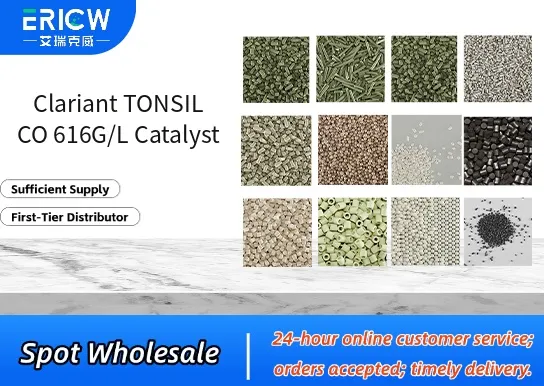
Highly selective activated clay catalyst optimized for esterification and transesterification reactions.
Low metal leaching profile ensures product purity and minimizes downstream purification steps.
Thermally stable up to 200 °C, enabling robust performance in continuous and batch processes.
Controlled acidity distribution provides consistent catalytic activity and extended service life.
Free-flowing granular form (1.5–3.0 mm) enables easy handling, fixed-bed operation, and reduced pressure drop.
Biodiesel production via transesterification of vegetable oils and animal fats.
Synthesis of biodegradable lubricants and specialty esters for cosmetics and pharma intermediates.
Polymerization catalyst support in polyester and alkyd resin manufacturing.
Refining of natural oil derivatives including fatty acid methyl esters (FAME) and glycerol esters.
Deacidification and bleaching adjunct in edible oil processing lines.
| Chemical Type | Acid-activated montmorillonite clay |
| Product Form | Granules |
| Appearance | Light grey to beige free-flowing granules |
| Particle Size Range | 1.5 – 3.0 mm |
| Loss on Ignition (LOI, 950 °C) | 8 – 12 wt% |
| Surface Area (BET) | 180 – 220 m²/g |
| Acid Capacity (meq H⁺/g) | 1.8 – 2.4 |
| Moisture Content | ≤ 5.0 wt% |
Q1: What is the primary function of TONSIL CO 616G/L in polymer processing?
A: TONSIL CO 616G/L is a highly active, liquid-phase clay-based catalyst designed to accelerate condensation reactions—particularly in silicone and polyurethane systems—by promoting efficient crosslinking and improving cure kinetics without excessive exotherm.
Q2: Is TONSIL CO 616G/L compatible with platinum-cured silicones?
A: No—it is not recommended for use in platinum-catalyzed (hydrosilylation) silicone systems, as it may interfere with platinum activity or cause premature gelation. It is specifically formulated for tin- or amine-catalyzed condensation-cure formulations.
Q3: How should TONSIL CO 616G/L be incorporated into a formulation?
A: It is typically added during the low-shear mixing stage under inert atmosphere to ensure uniform dispersion. Due to its liquid nature and compatibility with common organic solvents and silanes, it integrates readily without requiring pre-dispersion or high-energy milling.
Q4: Does this catalyst require special storage conditions?
A: Yes—store in tightly sealed original containers at temperatures between 5 °C and 30 °C, away from moisture, strong oxidizers, and direct sunlight. Prolonged exposure to humidity may affect catalytic consistency due to its hygroscopic clay component.
Contact With Us:
E-mail: wangxingqiang@ericwchem.com
Have a Questions? Call Us:
Add:
Building A1, Jiete Industrial Park, Huangpu District, Guangzhou City, Guangdong Province, China