English
 Español
 tiếng việt
 русский
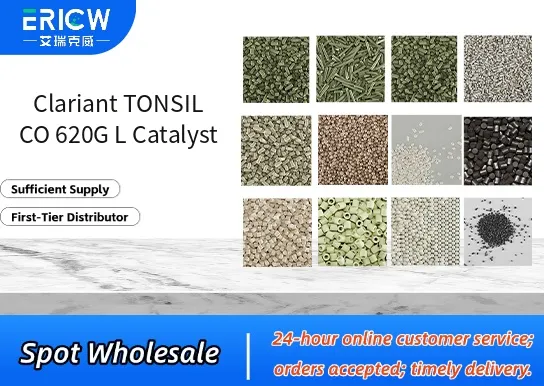
Highly selective activated clay catalyst optimized for low-temperature esterification and transesterification reactions.
Low heavy metal content ensures compliance with stringent regulatory requirements for food-contact and pharmaceutical intermediates.
Thermally stable up to 200 °C, enabling robust performance in continuous fixed-bed reactor configurations.
Controlled acidity profile delivers consistent reaction kinetics without excessive side-product formation.
Free-flowing granular form (1.5–3.0 mm) ensures uniform packing and minimal pressure drop in industrial-scale reactors.
Biodiesel production via methanolysis of vegetable oils and waste cooking oils.
Synthesis of biodegradable lubricants and plasticizers (e.g., dioctyl adipate, triethyl citrate).
Production of flavor and fragrance esters (e.g., isoamyl acetate, ethyl butyrate) under mild process conditions.
Polymer precursor synthesis, including polyester intermediates and alkyd resin modifiers.
Clean catalytic finishing of edible oil derivatives requiring non-corrosive, residue-free processing.
| Chemical Type | Acid-activated bentonitic clay catalyst |
| Product Form | Granules |
| Appearance | Light grey to beige free-flowing granules |
| Particle Size Range | 1.5–3.0 mm |
| Loss on Drying (105 °C, 2 h) | ≤ 8.0 wt% |
| Acid Capacity (meq H⁺/g) | 1.8–2.2 |
| Ignition Loss (900 °C) | 12–16 wt% |
| Primary Applications | Esterification, transesterification, acylation |
Q1: What is the primary function of TONSIL CO 620G L in polymer processing?
A: TONSIL CO 620G L is a highly active, low-ash clay-based catalyst designed to accelerate condensation reactions—particularly in silicone and polyurethane systems—by promoting efficient crosslinking and improving cure kinetics without excessive exotherm or premature gelation.
Q2: Is TONSIL CO 620G L compatible with food-contact or pharmaceutical-grade formulations?
A: While TONSIL CO 620G L is not pre-certified for direct food contact or pharmaceutical use, it may be considered for such applications where regulatory compliance is verified by the end-user through full formulation testing and adherence to relevant regional safety assessments.
Q3: How should TONSIL CO 620G L be incorporated into a resin system?
A: It is typically added during the mixing stage under moderate shear and elevated temperature, ensuring uniform dispersion. Pre-dilution in a compatible carrier solvent or base resin is recommended to avoid agglomeration and support consistent catalytic activity.
Q4: Does this catalyst require special storage or handling precautions?
A: Yes—store in a cool, dry place in original sealed packaging to prevent moisture uptake. Avoid exposure to high humidity or direct sunlight. Use appropriate PPE (gloves, eye protection) when handling powder form to minimize inhalation or skin contact.
Contact With Us:
E-mail: wangxingqiang@ericwchem.com
Have a Questions? Call Us:
Add:
Building A1, Jiete Industrial Park, Huangpu District, Guangzhou City, Guangdong Province, China