English
 Español
 tiếng việt
 русский
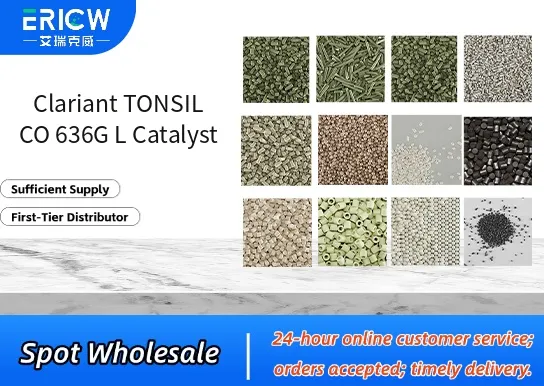
Highly selective acid catalyst optimized for low-temperature condensation reactions.
Thermally stable solid acid with controlled Brønsted acidity for consistent performance.
Free-flowing granular form enabling easy handling and precise dosing in continuous processes.
Low metal leaching profile, supporting compliance with stringent purity requirements in fine chemical synthesis.
Regenerable under mild thermal conditions, contributing to sustainable process economics.
Esterification and transesterification in biolubricant and biodiesel intermediate production.
Acetalization and ketalization for fragrance and pharmaceutical intermediate synthesis.
Dehydration reactions in the manufacture of ethers and unsaturated esters.
Condensation catalysis for specialty resins and functional polymer precursors.
Green chemistry applications requiring heterogeneous, non-corrosive alternatives to mineral acids.
| Chemical Type | Modified silica-alumina solid acid |
| Product Form | Granules (0.8–1.6 mm diameter) |
| Appearance | Off-white to light tan free-flowing granules |
| Primary Applications | Heterogeneous acid-catalyzed condensation and dehydration reactions |
| Key Features | Controlled acidity, thermal stability up to 300 °C, low dust generation |
| Benefits | Reduced corrosion risk, simplified separation, no aqueous waste streams |
| Storage Conditions | Store in dry, well-ventilated area; protect from moisture and strong oxidizers |
Q1: What is the primary function of TONSIL CO 636G L in polymer processing?
A: TONSIL CO 636G L is a highly active, low-ash clay-based catalyst designed to promote controlled crosslinking and thermal stabilization in peroxide-cured elastomers and thermoplastic vulcanizates (TPVs), particularly enhancing scorch safety and cure efficiency.
Q2: Is TONSIL CO 636G L compatible with silicone or fluoropolymer systems?
A: It is primarily formulated for use in non-polar and semi-crystalline thermoplastics and elastomers—such as EPDM, PP-based TPVs, and certain polyolefin blends. Compatibility with high-performance polymers like silicones or fluoropolymers is not typical and requires prior compatibility testing under application-specific conditions.
Q3: How should TONSIL CO 636G L be incorporated into a compound?
A: It is typically added during the masterbatch or final mixing stage using standard internal mixers or twin-screw extruders. Good dispersion is essential, and it is generally used at low concentrations—dosage depends on formulation requirements but commonly ranges from 0.1% to 2% by weight relative to the base polymer.
Q4: Does this catalyst require special handling or storage conditions?
A: Yes. As a fine, hygroscopic powder, TONSIL CO 636G L should be stored in a cool, dry environment under sealed conditions to prevent moisture uptake and agglomeration. Avoid exposure to high humidity or direct sunlight during handling and storage.
Contact With Us:
E-mail: wangxingqiang@ericwchem.com
Have a Questions? Call Us:
Add:
Building A1, Jiete Industrial Park, Huangpu District, Guangzhou City, Guangdong Province, China