English
 Español
 tiếng việt
 русский
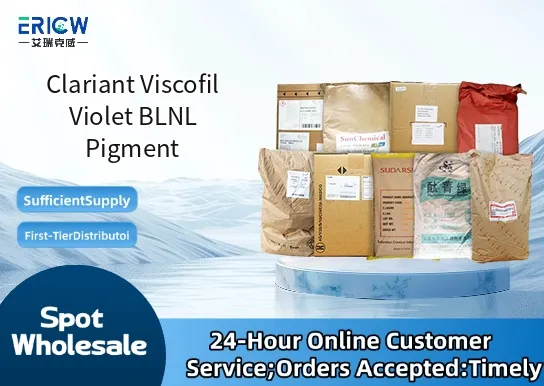
High chroma violet shade with excellent lightfastness and weather resistance.
Optimized dispersibility in aqueous and solvent-based systems for consistent color development.
Low volatile organic compound (VOC) content, supporting sustainable formulation requirements.
Good thermal stability up to 180 °C, suitable for medium-temperature processing.
Compliant with major global regulatory frameworks including REACH and RoHS.
Architectural coatings and industrial maintenance paints.
Plastic coloration for rigid PVC, polyolefins, and ABS.
Printing inks for packaging and commercial offset applications.
Automotive refinish coatings requiring high gloss and color fidelity.
Wood stains and transparent decorative finishes.
| Chemical Type | Organic Pigment (Quinacridone derivative) |
| Product Form | Free-flowing powder |
| Appearance | Violet to reddish-violet powder |
| Primary Applications | Coatings, plastics, inks |
| Key Features | High transparency, excellent dispersion, good migration resistance |
| Benefits | Consistent batch-to-batch color match, low dust generation during handling |
| Storage Conditions | Store in cool, dry place; protect from moisture and direct sunlight |
| Shelf Life | 36 months under recommended storage conditions |
Q1: What is the primary application field for Viscofil Violet BLNL?
A: Viscofil Violet BLNL is specifically engineered for use in solvent-based and UV-curable inks, coatings, and overprint varnishes—particularly where high transparency, strong tinting strength, and excellent gloss retention are required.
Q2: Is Viscofil Violet BLNL suitable for food-contact applications?
A: This pigment is not pre-qualified for direct food-contact applications. Its suitability must be evaluated case-by-case based on the final formulation, processing conditions, and applicable regulatory requirements in the target market.
Q3: How does Viscofil Violet BLNL perform under UV exposure?
A: It demonstrates good lightfastness and UV stability in typical ink and coating systems, especially when formulated with appropriate stabilizers and protected from prolonged, unfiltered UV radiation.
Q4: What dispersion methods are recommended for optimal performance?
A: High-shear dispersion using media mills or bead mills is recommended to achieve full deagglomeration and maximize color strength and transparency. Pre-dispersed pastes or liquid concentrates may also be used depending on system compatibility.
Contact With Us:
E-mail: wangxingqiang@ericwchem.com
Have a Questions? Call Us:
Add:
Building A1, Jiete Industrial Park, Huangpu District, Guangzhou City, Guangdong Province, China