English
 Español
 tiếng việt
 русский
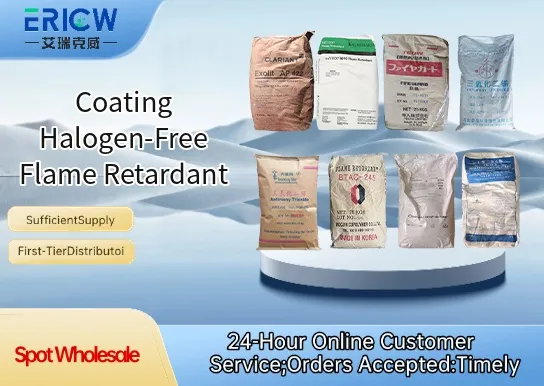
Zero halogen content — fully compliant with RoHS, REACH, and IEC 61249-2-21 standards.
Excellent char-forming capability that enhances thermal barrier performance during fire exposure.
Good compatibility with water-based and solvent-based acrylic, epoxy, and polyurethane coating systems.
Low smoke density and negligible toxic gas emission (CO, HCN, HCl) in combustion tests.
Stable dispersion without sedimentation during storage; supports long shelf life (>12 months at 25°C).
Fire-retardant coatings for steel structures in commercial and industrial buildings.
Intumescent topcoats for cable trays, conduits, and low-voltage power distribution enclosures.
Flame-resistant decorative and protective finishes for public transport interiors (buses, trains, metro cars).
Coatings for wooden substrates in high-risk indoor environments such as schools, hospitals, and hotels.
Functional finishing of fiber-reinforced polymer (FRP) composites used in offshore and construction applications.
| Chemical Type | Phosphorus-nitrogen synergistic intumescent system |
| Product Form | Fine white powder |
| Appearance | Free-flowing, homogeneous powder |
| Primary Applications | Water-based and solvent-based intumescent coatings |
| Key Features | Halogen-free, low-smoke, low-toxicity, UL 94 V-0 rated (when formulated) |
| Benefits | Reduces flame spread, delays substrate temperature rise, meets EN 13501-1 Class B-s1,d0 |
| pH (1% aqueous suspension) | 6.5 – 7.5 |
| Moisture Content (wt%) | ≤ 0.5% |
Q1: What types of coating systems is this halogen-free flame retardant compatible with?
A: It is designed for use in water-based and solvent-based architectural, industrial, and protective coatings—including acrylics, polyurethanes, and epoxy-modified systems—where low smoke and zero halogen content are critical for fire safety compliance.
Q2: How does this additive achieve flame retardancy without halogens?
A: It functions primarily through condensed-phase mechanisms—promoting char formation and enhancing thermal stability of the coating matrix—thereby reducing fuel availability and slowing heat release during combustion.
Q3: Does it affect coating clarity, adhesion, or long-term durability?
A: When properly dispersed and dosed within recommended ranges, it maintains optical clarity in transparent systems and does not compromise adhesion to common substrates or resistance to weathering and thermal cycling under typical service conditions.
Q4: What is the typical dosage range for effective flame retardancy in coatings?
A: Dosage depends on formulation requirements and target fire performance, but it is generally used at low concentrations—typically ranging from 0.1% to 2% by weight of the total formulation—to balance efficacy, processability, and final film properties.
Contact With Us:
E-mail: wangxingqiang@ericwchem.com
Have a Questions? Call Us:
Add:
Building A1, Jiete Industrial Park, Huangpu District, Guangzhou City, Guangdong Province, China