English
 Español
 tiếng việt
 русский
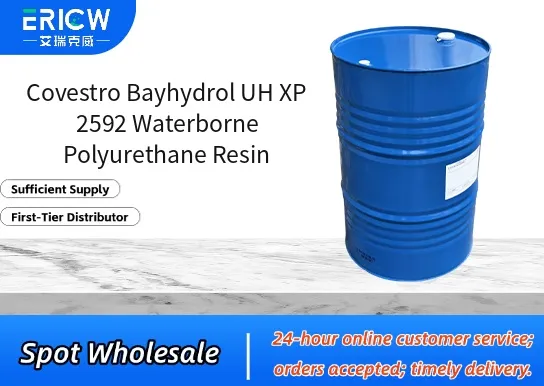
High solids content for improved film build and reduced VOC emissions.
Excellent hydrolytic stability enabling extended pot life and consistent processing.
Outstanding mechanical properties including scratch resistance and flexibility.
Good compatibility with acrylic and polyester dispersions for hybrid formulation flexibility.
Low odor and non-hazardous classification supporting safe handling and sustainable manufacturing.
Waterborne industrial wood coatings for furniture and cabinetry.
High-performance coatings for plastic substrates including automotive interior trim.
Coatings for metal substrates requiring corrosion resistance and aesthetic durability.
Leather finishing systems demanding softness, breathability, and abrasion resistance.
Architectural and decorative coatings where low-VOC compliance and gloss retention are critical.
| Chemical Type | Aliphatic waterborne polyurethane dispersion |
| Product Form | Liquid dispersion |
| Appearance | Opaque white to slightly bluish liquid |
| pH (at 23 °C) | 7.5 – 8.5 |
| Solids Content (wt. %) | 28 – 30 |
| Viscosity (mPa·s, Brookfield RVT, spindle #3, 20 rpm) | 100 – 400 |
| Density (g/cm³, at 20 °C) | 1.02 – 1.06 |
| Minimum Film Formation Temperature (MFFT) | ≈ 15 °C |
Q1: What is the primary application area for Bayhydrol UH XP 2592?
A: Bayhydrol UH XP 2592 is a high-performance anionic waterborne polyurethane dispersion designed primarily for demanding industrial coatings applications, including flexible and rigid plastic coatings, wood finishes, and specialty topcoats where excellent scratch resistance, gloss retention, and low-temperature film formation are required.
Q2: Can Bayhydrol UH XP 2592 be used in combination with acrylic dispersions or other waterborne resins?
A: Yes, Bayhydrol UH XP 2592 exhibits good compatibility with many common anionic acrylic dispersions and other waterborne polyurethane systems. Compatibility should always be verified experimentally in the final formulation, as performance may vary depending on pH, ionic strength, and coalescing agent selection.
Q3: Is Bayhydrol UH XP 2592 suitable for low-VOC or zero-VOC coating systems?
A: Yes — as a waterborne resin with inherently low volatile organic content, Bayhydrol UH XP 2592 supports the development of low-VOC coating formulations. Final VOC levels depend on the full formulation, including coalescents, additives, and crosslinkers, but the base dispersion itself contributes minimal VOC.
Q4: Does Bayhydrol UH XP 2592 require a crosslinker to achieve optimal performance?
A: While Bayhydrol UH XP 2592 can form functional films without added crosslinkers, its full potential — particularly in chemical resistance, hardness, and thermal stability — is typically realized when used with compatible waterborne crosslinkers such as blocked aliphatic isocyanates or aziridine-based systems, depending on cure conditions and end-use requirements.
Contact With Us:
E-mail: wangxingqiang@ericwchem.com
Have a Questions? Call Us:
Add:
Building A1, Jiete Industrial Park, Huangpu District, Guangzhou City, Guangdong Province, China