English
 Español
 tiếng việt
 русский
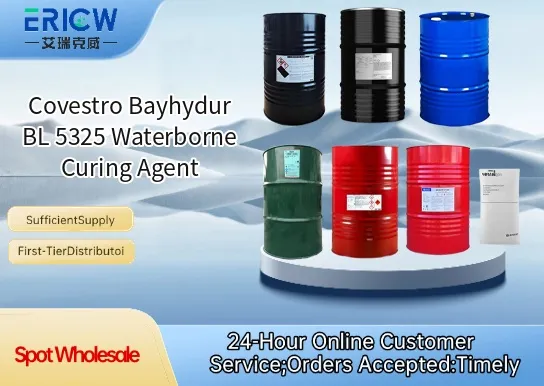
High-performance aliphatic polyisocyanate dispersion specifically designed for waterborne two-component polyurethane systems.
Excellent compatibility with a broad range of waterborne polyols, including acrylics, polyesters, and polyaspartic dispersions.
Enables fast ambient-cure film formation with outstanding hardness development and low-temperature curing capability.
Low VOC content compliant with stringent global environmental regulations for industrial coatings.
Superior hydrolytic stability and extended pot life compared to conventional waterborne isocyanates.
Automotive OEM and refinish clearcoats requiring high gloss and mar resistance.
Industrial maintenance coatings for metal substrates in architectural and agricultural equipment.
Wood coatings for furniture and flooring where low odor and rapid handling are critical.
Plastic coatings for automotive interior parts and consumer electronics housings.
General-purpose protective coatings for machinery and infrastructure in corrosion-sensitive environments.
| Chemical Type | Aliphatic polyisocyanate dispersion (HDI-based) |
| Product Form | Opaque white to slightly yellow liquid dispersion |
| Appearance | Homogeneous aqueous dispersion, no sedimentation |
| Solids Content (wt. %) | 48–52 % |
| NCO Content (wt. %) | 4.0–4.6 % |
| pH (25 °C) | 7.0–8.5 |
| Viscosity (25 °C, mPa·s) | 150–350 (Brookfield, spindle #3, 20 rpm) |
| Stability (Storage) | ≥ 6 months at 5–30 °C, unopened container |
Q1: What is the primary chemical composition of Bayhydur BL 5325?
A: Bayhydur BL 5325 is a water-dispersible aliphatic polyisocyanate based on hexamethylene diisocyanate (HDI) trimer chemistry, modified with hydrophilic groups to enable stable dispersion in aqueous systems without added organic solvents or surfactants.
Q2: Can Bayhydur BL 5325 be used in ambient-cure waterborne coatings?
A: Yes — it is specifically designed for ambient- and low-bake curing applications in waterborne two-component polyurethane systems. It offers good pot life at room temperature while enabling rapid film formation and crosslinking under typical industrial drying conditions.
Q3: How does Bayhydur BL 5325 differ from solvent-based HDI trimers in terms of compatibility?
A: Unlike conventional solvent-based HDI trimers, Bayhydur BL 5325 is formulated as a stable aqueous dispersion and exhibits excellent compatibility with anionic and nonionic waterborne polyols, including acrylics, polyesters, and polyurethane dispersions — without requiring co-solvents to stabilize the blend.
Q4: What are key handling and storage recommendations?
A: Store in tightly sealed original containers at temperatures between 5 °C and 30 °C, protected from freezing and direct sunlight. Avoid prolonged exposure to high humidity during handling, and ensure thorough mixing before use to maintain dispersion stability.
Contact With Us:
E-mail: wangxingqiang@ericwchem.com
Have a Questions? Call Us:
Add:
Building A1, Jiete Industrial Park, Huangpu District, Guangzhou City, Guangdong Province, China