English
 Español
 tiếng việt
 русский
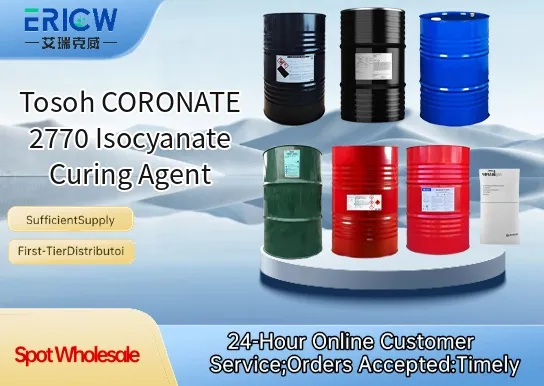
Aliphatic hexamethylene diisocyanate (HDI)-based trimer with low volatility and excellent weather resistance.
Non-yellowing formulation ideal for high-gloss, UV-stable topcoats and clear finishes.
Controlled reactivity enables extended pot life and smooth film formation in ambient- or forced-dry conditions.
Low monomer content (<0.5%) meets stringent industrial safety and VOC compliance requirements.
Compatible with a broad range of hydroxyl-functional resins including acrylics, polyesters, and alkyds.
Automotive OEM and refinish clearcoats requiring exceptional clarity and long-term gloss retention.
Industrial maintenance coatings for metal substrates exposed to outdoor environments.
High-performance wood coatings used in premium furniture and architectural millwork.
Aerospace interior coatings where non-yellowing performance and low outgassing are critical.
| Chemical Type | Aliphatic HDI-based isocyanurate trimer |
| Product Form | Liquid |
| Appearance | Colorless to pale yellow transparent liquid |
| NCO Content (wt%) | 18.5–19.5% |
| Viscosity (25°C, mPa·s) | 1,800–2,400 |
| Density (25°C, g/cm³) | 1.18–1.22 |
| Flash Point (PMCC, °C) | 150–160 |
| Storage Stability | Stable for ≥12 months at 25°C in sealed containers |
Q1: What is the primary chemical nature of CORONATE 2770?
A: CORONATE 2770 is a low-viscosity, aliphatic polyisocyanate curing agent based on hexamethylene diisocyanate (HDI) trimer chemistry, designed for ambient- or heat-cured two-component polyurethane systems.
Q2: How does CORONATE 2770 compare to aromatic isocyanates in terms of performance and application suitability?
A: Unlike aromatic isocyanates, CORONATE 2770 offers excellent UV stability and resistance to yellowing, making it well-suited for high-performance topcoats, clearcoats, and outdoor applications where long-term gloss retention and color fidelity are critical.
Q3: What types of resins is CORONATE 2770 typically formulated with?
A: It is commonly paired with hydroxyl-functional acrylics, polyesters, and alkyds in two-component coatings, adhesives, and sealants—particularly where fast cure development, good flexibility, and chemical resistance are required.
Q4: Is CORONATE 2770 suitable for low-VOC formulations?
A: Yes—its low viscosity and high functionality allow formulators to reduce or eliminate reactive diluents while maintaining workable pot life and achieving robust film properties, supporting compliance with evolving low-VOC regulatory expectations.
Q5: What safety and handling considerations apply to CORONATE 2770?
A: As with all isocyanates, appropriate personal protective equipment—including respirators with organic vapor cartridges, nitrile gloves, and eye protection—is essential during handling. It should be stored under dry, inert conditions to prevent moisture-induced gelation.
Contact With Us:
E-mail: wangxingqiang@ericwchem.com
Have a Questions? Call Us:
Add:
Building A1, Jiete Industrial Park, Huangpu District, Guangzhou City, Guangdong Province, China