English
 Español
 tiếng việt
 русский
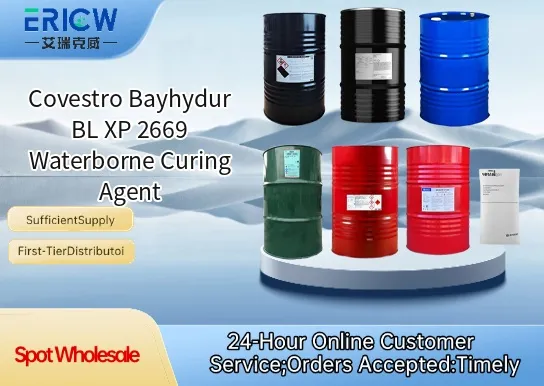
High-performance aliphatic polyisocyanate dispersion for low-VOC, waterborne two-component polyurethane systems.
Excellent compatibility with a broad range of waterborne polyols and acrylic dispersions.
Fast ambient-cure capability with good early hardness development and film formation.
Outstanding gloss retention, weather resistance, and UV stability due to aliphatic chemistry.
Low free monomer content (<0.1% HDI), meeting stringent regulatory and occupational safety requirements.
Architectural and industrial maintenance coatings for metal and concrete substrates.
Waterborne wood coatings requiring high clarity, hardness, and chemical resistance.
Automotive refinish clearcoats and basecoat/clearcoat systems.
Plastic coatings for interior automotive trim and consumer electronics housings.
High-end furniture and flooring finishes demanding durability and low emission profiles.
| Chemical Type | Aliphatic polyisocyanate (HDI-based) dispersion |
| Product Form | Opaque white to slightly yellow aqueous dispersion |
| Appearance | Homogeneous liquid, no sedimentation after gentle stirring |
| Non-Volatile Content (wt%) | 48–52% |
| pH Value | 7.5–8.5 |
| Viscosity (mPa·s, 23°C, Brookfield LVT) | 150–350 |
| Free HDI Monomer Content | <0.1 wt% |
| Storage Stability (unopened, 5–30°C) | ≥12 months |
Q1: What is the primary function of Bayhydur BL XP 2669 in waterborne coating systems?
A: Bayhydur BL XP 2669 is a water-dispersible polyisocyanate curing agent designed to react with waterborne polyols and amines, enabling ambient- or low-temperature crosslinking in high-performance, low-VOC coatings for industrial and protective applications.
Q2: Is Bayhydur BL XP 2669 compatible with common waterborne resins such as acrylics, polyurethane dispersions (PUDs), and polyester dispersions?
A: Yes — it demonstrates broad compatibility with a range of waterborne polymer dispersions, including acrylics, PUDs, and polyester dispersions. Compatibility and film formation should be verified in the final formulation due to variations in pH, particle size, and stabilizer chemistry.
Q3: How does Bayhydur BL XP 2669 contribute to VOC reduction in finished coatings?
A: As a waterborne curing agent, it eliminates the need for organic solvents typically required by conventional solventborne isocyanates, supporting compliant formulations that meet stringent global VOC regulations for architectural, industrial maintenance, and automotive refinish applications.
Q4: What are typical storage conditions and shelf life considerations?
A: Store in tightly sealed original containers at temperatures between 5 °C and 30 °C, protected from freezing and excessive heat. Under recommended conditions, the unopened product typically maintains stability for up to 12 months; always verify usability via visual inspection and viscosity check before use.
Contact With Us:
E-mail: wangxingqiang@ericwchem.com
Have a Questions? Call Us:
Add:
Building A1, Jiete Industrial Park, Huangpu District, Guangzhou City, Guangdong Province, China