English
 Español
 tiếng việt
 русский
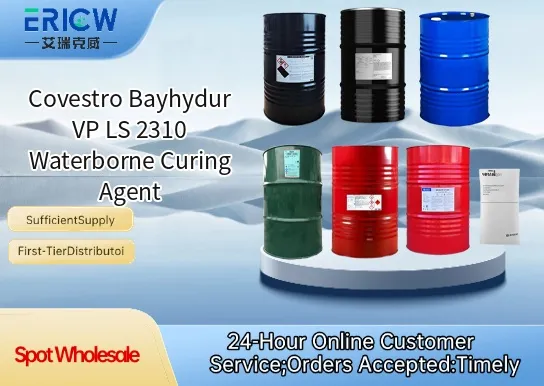
Low-VOC, waterborne aliphatic polyisocyanate dispersion for sustainable coating formulations.
Excellent compatibility with a broad range of waterborne acrylic, polyester, and polyurethane dispersions.
Fast ambient-cure performance without need for external catalysts or high-temperature baking.
Outstanding hydrolytic stability and storage stability (≥12 months at 5–30 °C).
Provides exceptional hardness, chemical resistance, and gloss retention in final films.
Waterborne industrial maintenance coatings for metal substrates.
High-performance wood coatings, including furniture and flooring finishes.
Automotive refinish coatings requiring low-emission, fast-dry systems.
Plastic coatings for interior automotive parts and consumer electronics.
Architectural and decorative protective coatings for interior applications.
| Chemical Type | Aliphatic polyisocyanate (HDI-based) dispersion |
| Product Form | Opaque white to slightly yellow liquid |
| Appearance | Homogeneous aqueous dispersion |
| Solids Content | 48 ± 1 wt.% |
| NCO Content | 4.2 ± 0.2 wt.% |
| pH Value | 7.5 – 8.5 |
| Viscosity (23 °C, Brookfield RVT, spindle #3, 20 rpm) | 150 – 350 mPa·s |
| Storage Stability | ≥12 months at 5–30 °C (unopened container) |
Q1: What is the primary function of Bayhydur VP LS 2310 in waterborne coating systems?
A: Bayhydur VP LS 2310 is a low-viscosity, aliphatic polyisocyanate-based curing agent designed to crosslink waterborne hydroxyl-functional resins—such as acrylics, polyesters, or hybrid dispersions—enabling ambient- or forced-dry film formation with excellent gloss, hardness, and chemical resistance.
Q2: Is Bayhydur VP LS 2310 compatible with common waterborne base resins?
A: Yes—it demonstrates broad compatibility with a wide range of commercially available waterborne hydroxyl-functional acrylic, polyester, and polyurethane dispersions. Compatibility and stability should be verified in the final formulation, particularly regarding pot life, dispersion behavior, and film clarity.
Q3: How does Bayhydur VP LS 2310 contribute to VOC reduction in coatings?
A: As a waterborne curing agent supplied in aqueous dispersion form, it eliminates the need for organic solvents typically required for solvent-borne polyisocyanates—supporting formulations that meet stringent regional VOC limits without compromising crosslink density or performance.
Q4: What are typical storage and handling recommendations?
A: Store in original sealed containers at temperatures between 5 °C and 30 °C, protected from frost and direct sunlight. Avoid prolonged exposure to high humidity during handling, and ensure thorough mixing before use. Do not dilute with water or other solvents unless validated for the specific application.
Contact With Us:
E-mail: wangxingqiang@ericwchem.com
Have a Questions? Call Us:
Add:
Building A1, Jiete Industrial Park, Huangpu District, Guangzhou City, Guangdong Province, China