English
 Español
 tiếng việt
 русский
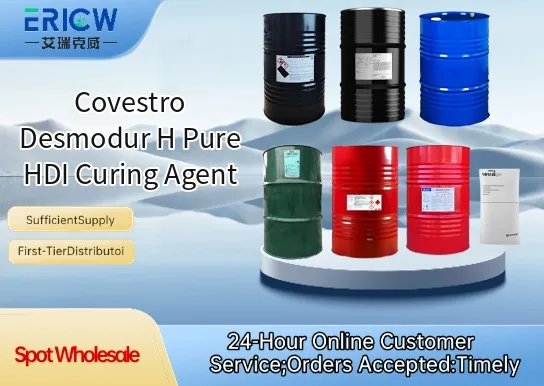
High-purity hexamethylene diisocyanate (HDI) trimer with minimal monomer content (<0.1 wt%) for enhanced stability and reduced volatility.
Excellent hydrolytic stability and long pot life in two-component polyurethane systems.
Low-viscosity liquid enabling easy handling, precise metering, and excellent film formation without solvents.
Delivers outstanding weather resistance, gloss retention, and UV stability in demanding outdoor applications.
Compliant with stringent global regulatory requirements including REACH and FDA 21 CFR §175.300 for indirect food contact coatings.
Automotive clearcoats and basecoats requiring high durability and aesthetic performance.
Industrial maintenance coatings for machinery, infrastructure, and agricultural equipment.
High-performance wood coatings for premium furniture and architectural millwork.
Aerospace interior coatings meeting strict VOC and outgassing specifications.
Plastic coatings for electronics housings and consumer goods requiring scratch and chemical resistance.
| Chemical Type | HDI-based aliphatic isocyanurate trimer |
| Product Form | Clear, colorless to pale yellow liquid |
| Appearance | Homogeneous, transparent liquid at 25 °C |
| NCO Content (wt%) | 18.5–19.2 |
| Viscosity at 25 °C (mPa·s) | 1,200–1,600 |
| Density at 25 °C (g/cm³) | 1.18–1.21 |
| Monomer (HDI) Content (wt%) | ≤0.1 |
| Storage Stability | ≥12 months at 15–25 °C in sealed containers |
Q1: What is the primary chemical nature of Desmodur H Pure HDI?
A: Desmodur H Pure HDI is a highly purified, low-viscosity aliphatic diisocyanate based on hexamethylene diisocyanate (HDI), supplied as the monomeric form without added solvents or stabilizers.
Q2: How does Desmodur H Pure differ from HDI-based polyisocyanates such as Desmodur N series?
A: Unlike modified HDI polyisocyanates (e.g., biuret or isocyanurate types), Desmodur H Pure contains only the unreacted HDI monomer, offering higher reactivity, lower viscosity, and greater sensitivity to moisture—making it suitable for applications requiring precise stoichiometric control and minimal steric hindrance.
Q3: What are key handling and storage considerations for this product?
A: Desmodur H Pure must be stored under dry, inert conditions (e.g., nitrogen blanket) in tightly sealed containers, protected from moisture and ambient humidity. Prolonged exposure to air may lead to dimerization or uretdione formation, affecting reactivity and shelf life.
Q4: Which types of resins is Desmodur H Pure typically used with?
A: It is commonly employed as a curing agent for hydroxyl-functional acrylics, polyesters, and alkyds in high-performance coatings—especially where excellent gloss retention, UV stability, and weather resistance are required, such as in automotive clearcoats and premium industrial finishes.
Q5: Is Desmodur H Pure compatible with common catalysts used in two-component polyurethane systems?
A: Yes—it responds well to standard tertiary amine and organometallic catalysts (e.g., dibutyltin dilaurate), though catalyst selection and dosage should be optimized carefully to balance pot life and cure speed, particularly given its high intrinsic reactivity.
Contact With Us:
E-mail: wangxingqiang@ericwchem.com
Have a Questions? Call Us:
Add:
Building A1, Jiete Industrial Park, Huangpu District, Guangzhou City, Guangdong Province, China