English
 Español
 tiếng việt
 русский
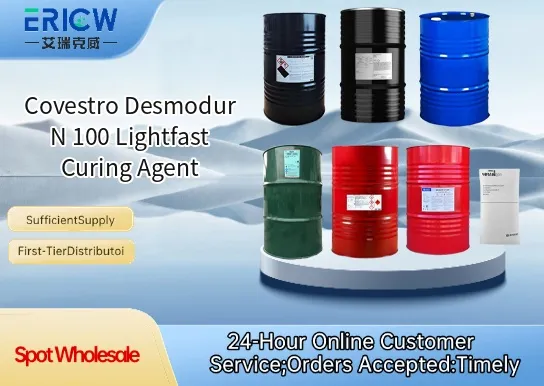
Exceptional lightfastness and UV resistance for long-term color stability in demanding outdoor applications.
Low-viscosity liquid formulation enabling easy handling, precise metering, and homogeneous mixing with polyols.
Excellent compatibility with aliphatic polyisocyanates and standard polyester/polyacrylate polyols.
Fast-curing performance at ambient and elevated temperatures without compromising film flexibility or gloss retention.
Non-yellowing chemistry ideal for high-clarity, white, and pastel-colored coatings requiring optical purity.
Automotive clearcoats and OEM topcoats requiring superior weatherability and gloss retention.
High-end architectural and industrial maintenance coatings for façades, bridges, and metal cladding.
Powder coating hybrid systems where enhanced flow and reduced curing temperature are critical.
UV-resistant wood finishes for exterior furniture, decking, and joinery applications.
Specialty plastic coatings for outdoor signage, lighting housings, and consumer electronics enclosures.
| Chemical Type | Aliphatic polyisocyanate (hexamethylene diisocyanate-based trimer) |
| Product Form | Liquid |
| Appearance | Clear, pale yellow to colorless liquid |
| NCO Content (wt %) | 15.5 – 16.5 |
| Viscosity at 25 °C (mPa·s) | 800 – 1,200 |
| Density at 20 °C (g/cm³) | 1.19 – 1.23 |
| Solvent Content (wt %) | None (solvent-free) |
| Storage Stability | ≥12 months at 20–25 °C in sealed original container |
Q1: What is the primary function of Desmodur N 100 in coating and adhesive formulations?
A: Desmodur N 100 is a lightfast aliphatic polyisocyanate curing agent designed to react with hydroxyl-functional resins—such as polyesters, acrylics, or polyethers—to form durable, UV-stable polyurethane networks. Its key role is to enhance crosslink density, improving hardness, chemical resistance, and long-term gloss retention without yellowing under exposure to light.
Q2: How does Desmodur N 100 differ from aromatic isocyanate curing agents like Desmodur N 3300?
A: Unlike aromatic isocyanates, Desmodur N 100 is based on aliphatic chemistry—specifically hexamethylene diisocyanate (HDI) trimer—which provides exceptional lightfastness and non-yellowing performance. This makes it suitable for topcoats and clear finishes where color stability and clarity are critical, whereas aromatic alternatives may discolor upon UV exposure.
Q3: Is Desmodur N 100 compatible with moisture-cure or one-component systems?
A: No—Desmodur N 100 is formulated for two-component (2K) polyurethane systems requiring separate mixing with OH-functional components. It is not intended for moisture-cure applications, as its reactivity is optimized for controlled stoichiometric reaction with polyols rather than ambient humidity.
Q4: What storage conditions are recommended to maintain product stability?
A: Store in tightly sealed original containers under dry, cool conditions (typically below 30 °C), protected from moisture, heat, and direct sunlight. Prolonged exposure to humidity or elevated temperatures may lead to viscosity increase or gelation due to premature reaction with water or self-polymerization.
Q5: Can Desmodur N 100 be used in low-VOC or high-solids formulations?
A: Yes—Desmodur N 100 is commonly employed in solventborne, high-solids, and certain solvent-reduced systems. Its relatively low viscosity and good compatibility with common organic solvents support formulation flexibility while helping meet VOC reduction targets without compromising film formation or cure performance.
Contact With Us:
E-mail: wangxingqiang@ericwchem.com
Have a Questions? Call Us:
Add:
Building A1, Jiete Industrial Park, Huangpu District, Guangzhou City, Guangdong Province, China