English
 Español
 tiếng việt
 русский
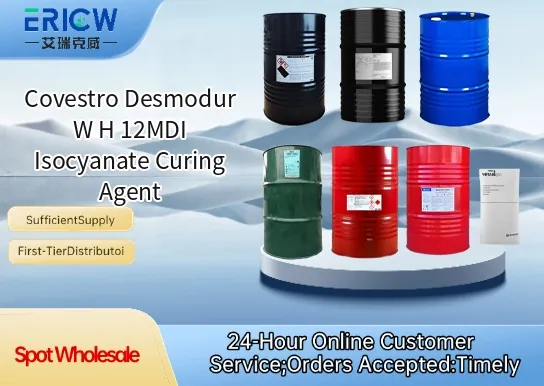
Highly reactive aliphatic isocyanate based on hexamethylene diisocyanate (HDI) trimer chemistry, offering excellent storage stability.
Low volatility and reduced monomer content compared to conventional HDI trimers, enhancing occupational safety and handling.
Excellent compatibility with hydroxyl-functional acrylics, polyesters, and polycarbonate polyols for high-performance coatings.
Delivers outstanding UV resistance, gloss retention, and weathering performance in demanding outdoor applications.
Enables formulation of low-VOC, high-solids, and solvent-borne two-component polyurethane systems compliant with global regulatory standards.
Automotive OEM and refinish clearcoats requiring exceptional durability and optical clarity.
Industrial maintenance coatings for infrastructure, machinery, and agricultural equipment.
High-end architectural coatings for façades, windows, and metal cladding exposed to harsh environments.
Plastic coatings for automotive interior parts, electronics housings, and consumer goods.
Wood coatings for premium furniture, flooring, and cabinetry demanding scratch resistance and aesthetic fidelity.
| Chemical Type | Aliphatic HDI-based isocyanurate trimer |
| Product Form | Liquid |
| Appearance | Clear, colorless to pale yellow liquid |
| NCO Content (wt %) | Approx. 19.5–20.5% |
| Viscosity at 25 °C (mPa·s) | Approx. 1,800–2,400 |
| Density at 20 °C (g/cm³) | Approx. 1.18–1.22 |
| Flash Point (PMCC, °C) | Approx. 145–155 |
| Primary Applications | Two-component polyurethane coatings (automotive, industrial, architectural, plastic, wood) |
Q1: What is the primary chemical composition of Desmodur W H 12MDI?
A: Desmodur W H 12MDI is a low-viscosity, aliphatic isocyanate based on hexamethylene diisocyanate (HDI), modified to provide enhanced hydrolytic stability and reduced volatility compared to standard HDI trimer. It contains no aromatic moieties and is formulated as a non-yellowing curing agent for high-performance coatings and adhesives.
Q2: How does Desmodur W H 12MDI differ from conventional HDI trimers in terms of handling and performance?
A: Unlike conventional HDI trimers, Desmodur W H 12MDI exhibits lower viscosity and improved compatibility with a broader range of polyols and resins. Its modified structure contributes to better storage stability, reduced sensitivity to moisture during processing, and more consistent film formation—particularly beneficial in ambient-cure or low-bake coating systems.
Q3: What types of resin systems is Desmodur W H 12MDI typically used with?
A: It is commonly paired with hydroxyl-functional acrylics, polyesters, and polyether polyols in two-component (2K) coating, adhesive, and sealant formulations. Its reactivity profile supports both spray-applied industrial finishes and high-solids or solvent-reduced systems requiring extended pot life and controlled cure kinetics.
Q4: What safety and handling precautions should be observed when using this product?
A: As with all isocyanates, Desmodur W H 12MDI requires appropriate personal protective equipment (PPE), including nitrile gloves, chemical-resistant goggles, and respiratory protection where ventilation is insufficient. Avoid skin contact and inhalation of vapors or aerosols. Store in tightly sealed containers under dry, cool conditions away from moisture and strong bases.
Q5: Can Desmodur W H 12MDI be used in food-contact or medical device applications?
A: Desmodur W H 12MDI is not pre-approved for direct food-contact or implantable medical applications. Its suitability for regulated end-uses depends on full formulation evaluation, including migration testing and compliance verification by the final product manufacturer against applicable regional regulatory frameworks.
Contact With Us:
E-mail: wangxingqiang@ericwchem.com
Have a Questions? Call Us:
Add:
Building A1, Jiete Industrial Park, Huangpu District, Guangzhou City, Guangdong Province, China