English
 Español
 tiếng việt
 русский
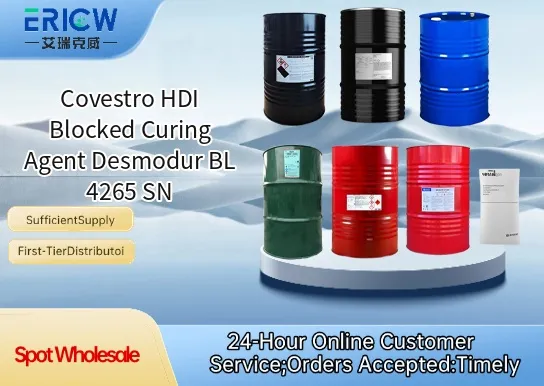
Thermal deblocking at 130–160 °C enables low-VOC, one-component polyurethane formulations.
Excellent storage stability at ambient temperature with no premature reaction during shelf life.
Provides high crosslink density and superior chemical resistance in cured films.
Compatible with hydroxyl-functional acrylics, polyesters, and alkyds for versatile coating systems.
Low free HDI monomer content (< 0.1 wt%) meets stringent occupational health and regulatory requirements.
Automotive OEM clearcoats and basecoats requiring high gloss and durability.
Industrial maintenance coatings for metal substrates exposed to harsh environments.
Wood finishing systems demanding low-temperature cure and excellent film hardness.
Plastic coatings for automotive interior trim and consumer electronics housings.
| Chemical Type | HDI-based blocked isocyanate (ε-caprolactam blocked) |
| Product Form | Liquid |
| Appearance | Clear, pale yellow liquid |
| Primary Applications | One-component thermosetting coatings |
| Key Features | Thermally activated, low-free-isocyanate, ambient-stable |
| Benefits | Easy handling, extended pot life, reduced VOC, high crosslink efficiency |
| Recommended Cure Temperature | 130–160 °C (depending on substrate and film thickness) |
| Storage Conditions | Store below 30 °C in tightly sealed containers; protect from moisture |
Q1: What is the primary function of Desmodur BL 4265 SN in coating and adhesive formulations?
A: Desmodur BL 4265 SN is a blocked aliphatic isocyanate curing agent designed to provide latent reactivity—remaining stable at ambient temperature while enabling controlled crosslinking upon thermal activation, typically above 120 °C. It delivers excellent gloss retention, weather resistance, and mechanical durability in high-performance two-component polyurethane systems.
Q2: Which types of resins or polymers is Desmodur BL 4265 SN typically compatible with?
A: It is primarily formulated for use with hydroxyl-functional acrylics, polyesters, and alkyds. Its blocked HDI chemistry ensures good compatibility and storage stability in solventborne and high-solids systems, though compatibility testing is recommended for waterborne or highly functional resin blends.
Q3: How does the blocking agent in BL 4265 SN influence its handling and processing?
A: The blocking agent imparts low volatility and eliminates free isocyanate exposure during mixing and application, enhancing occupational safety and simplifying formulation logistics. Deblocking occurs cleanly upon heating, minimizing by-product formation and supporting high-film-quality finishes without yellowing.
Q4: What are key storage and handling recommendations for this product?
A: Store in tightly sealed containers under dry, cool conditions (below 30 °C) and protect from moisture, direct sunlight, and strong oxidizing agents. Prolonged exposure to humidity or elevated temperatures may lead to premature deblocking or viscosity increase. Always follow Covestro’s Safety Data Sheet for personal protective equipment and ventilation guidance.
Contact With Us:
E-mail: wangxingqiang@ericwchem.com
Have a Questions? Call Us:
Add:
Building A1, Jiete Industrial Park, Huangpu District, Guangzhou City, Guangdong Province, China