English
 Español
 tiếng việt
 русский
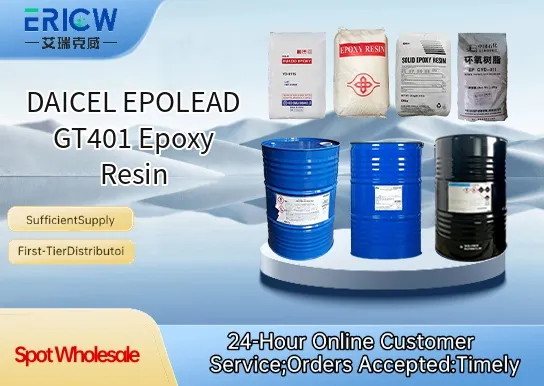
Highly reactive liquid epoxy resin with low viscosity for excellent processability and filler wetting.
Designed for fast ambient- or low-temperature curing with compatible amine and anhydride hardeners.
Delivers superior mechanical strength, chemical resistance, and thermal stability in cured networks.
Low chloride content ensures high electrical insulation performance and corrosion resistance in electronic applications.
Consistent batch-to-batch quality supported by Daicel’s stringent ISO 9001-certified manufacturing control.
Encapsulants and potting compounds for power electronics and automotive sensors.
Electrical insulating varnishes and impregnating resins for motors and transformers.
Structural adhesives requiring rapid development of handling strength at room temperature.
Composite matrix resin for fiber-reinforced laminates in aerospace and industrial tooling.
Underfill materials for flip-chip and wafer-level packaging in semiconductor assembly.
| Chemical Type | Diglycidyl ether of bisphenol-A (DGEBA) epoxy resin |
| Product Form | Clear to pale yellow liquid |
| Appearance | Transparent, low-viscosity liquid, free from gels or suspended matter |
| Epoxy Equivalent Weight (EEW) | 185–195 g/eq |
| Viscosity at 25°C | 12,000–16,000 mPa·s |
| Chloride Content | ≤ 500 ppm |
| Volatiles Content | ≤ 0.3 wt% |
| Primary Applications | Electronics encapsulation, electrical insulation, structural bonding, composite matrices |
Q1: What is the primary function of EPOLEAD GT401 in epoxy formulations?
A: EPOLEAD GT401 is a reactive diluent designed to reduce viscosity and improve processability of epoxy resins without significantly compromising final mechanical or thermal performance. It participates in the curing reaction, becoming an integral part of the polymer network.
Q2: Is GT401 compatible with common amine and anhydride curing agents?
A: Yes, GT401 demonstrates broad compatibility with standard aliphatic and aromatic amines, as well as cyclic anhydrides. Its reactivity profile allows for flexible formulation across conventional and elevated-temperature cure schedules.
Q3: How does GT401 compare to non-reactive diluents in terms of VOC content and film properties?
A: As a reactive diluent, GT401 contributes zero VOCs upon full cure and avoids the volatility, migration, and plasticization issues associated with non-reactive types—resulting in higher crosslink density, improved chemical resistance, and better long-term stability.
Q4: Can GT401 be used in applications requiring low-temperature cure?
A: Yes, GT401 maintains good reactivity at reduced temperatures when paired with appropriate catalysts or latent hardeners, enabling formulations suitable for energy-efficient processing while retaining acceptable pot life and cure kinetics.
Contact With Us:
E-mail: wangxingqiang@ericwchem.com
Have a Questions? Call Us:
Add:
Building A1, Jiete Industrial Park, Huangpu District, Guangzhou City, Guangdong Province, China