English
 Español
 tiếng việt
 русский
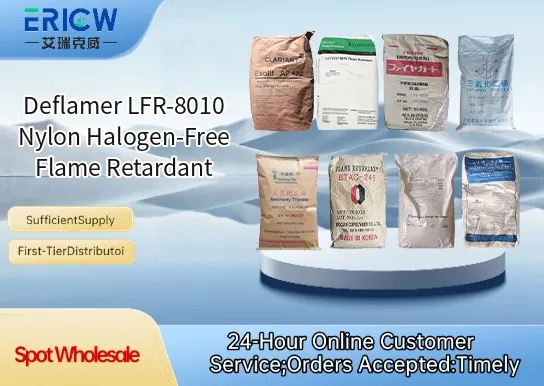
UL 94 V-0 rated flame retardancy in 30% glass-filled nylon 6 and nylon 66 at loading levels as low as 12–15 wt%
Halogen-free formulation ensures compliance with RoHS, REACH, and IEC 61249-2-21 environmental regulations
Excellent thermal stability up to 300°C, supporting standard nylon processing conditions including injection molding and extrusion
Maintains high mechanical performance—minimal impact on tensile strength, flexural modulus, and impact resistance
Low migration and superior long-term aging resistance under heat and humidity exposure
Electrical connectors and housings for automotive ECUs and charging systems
Power tool casings and internal components requiring UL-certified flame performance
Consumer electronics enclosures including laptop adapters, power supplies, and smart home devices
Industrial automation components such as sensor housings and relay bases
LED lighting fixtures and driver modules demanding halogen-free, low-smoke materials
| Chemical Type | Organophosphorus-based synergistic flame retardant system |
| Product Form | Powder (free-flowing, non-dusting) |
| Appearance | White to off-white fine powder |
| Primary Applications | Nylon 6, Nylon 66 (with and without glass fiber reinforcement) |
| Key Features | Halogen-free, phosphorus-nitrogen synergy, low corrosivity |
| Benefits | No brominated/ chlorinated compounds; low smoke density; no pre-drying required |
| Density (g/cm³) | 1.45 ± 0.05 |
| Moisture Content (wt%) | ≤ 0.3% |
Q1: What types of nylon resins is LFR-8010 compatible with?
A: LFR-8010 is specifically formulated for use with polyamide 6 (PA6) and polyamide 66 (PA66), including both virgin and glass-fiber reinforced grades. It demonstrates good dispersion and thermal stability during standard melt processing conditions.
Q2: How does LFR-8010 achieve flame retardancy without halogenated compounds?
A: LFR-8010 operates through a synergistic phosphorus–nitrogen intumescent mechanism, promoting char formation on the polymer surface during combustion. This protective char layer insulates the underlying material and suppresses smoke and toxic gas evolution.
Q3: Does LFR-8010 affect the mechanical properties of nylon compounds?
A: When properly compounded, LFR-8010 maintains favorable balance between flame performance and mechanical integrity—tensile strength, impact resistance, and heat deflection temperature remain suitable for structural applications. Optimization of processing parameters and optional compatibilizers may further enhance property retention.
Q4: Is LFR-8010 suitable for applications requiring regulatory compliance with RoHS and REACH?
A: Yes—LFR-8010 is inherently free of brominated, chlorinated, and other halogenated flame retardants, and contains no substances currently listed under Annex XIV or XVII of REACH or restricted by RoHS Directive. Full regulatory documentation is available upon request for qualified customers.
Contact With Us:
E-mail: wangxingqiang@ericwchem.com
Have a Questions? Call Us:
Add:
Building A1, Jiete Industrial Park, Huangpu District, Guangzhou City, Guangdong Province, China