English
 Español
 tiếng việt
 русский
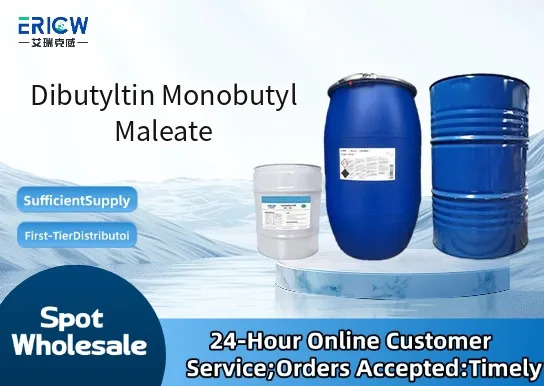
Highly effective organotin-based catalyst for condensation-cure silicone elastomers and RTV systems.
Offers excellent storage stability with low volatility and minimal odor compared to dibutyltin dilaurate (DBTDL).
Provides balanced reactivity—faster than stannous octoate yet more controllable than highly active tin carboxylates.
Improved hydrolytic stability due to the maleate ester structure, reducing risk of premature gelation in moisture-sensitive formulations.
Compatible with platinum-inhibited systems where tin-selective catalysis is required without interfering with Pt activity.
Room-temperature vulcanizing (RTV-1 and RTV-2) silicone sealants and adhesives.
Moisture-cure polyurethane coatings, sealants, and elastomers (MS polymers).
Catalyst in tin-mediated transesterification and ester interchange reactions for specialty polyester synthesis.
Latent curing agent for heat-activated epoxy-acid anhydride systems requiring delayed onset.
Stabilizer and co-catalyst in PVC thermal stabilization formulations (secondary role, non-primary).
| Chemical Type | Organotin monoester (mixed butyl/maleate) |
| Product Form | Pale yellow to amber viscous liquid |
| Appearance | Clear, homogeneous liquid; slight characteristic odor |
| Specific Gravity (25°C) | 1.22–1.26 g/cm³ |
| Refractive Index (20°C) | 1.495–1.510 |
| Primary Applications | Condensation-cure silicone & moisture-cure PU catalyst |
| Key Features | Low volatility, hydrolytically robust, selective tin(IV) catalysis |
| Regulatory Compliance | REACH registered; not listed under TSCA Significant New Use Rules (SNUR); RoHS-compliant for industrial use |
| Common Compatible Systems | Suitability |
| Acetoxy-cure RTV silicones (e.g., acetic acid release type) | Highly Recommended – Optimal cure speed and surface tack-free performance |
| Alkoxy-cure RTV silicones (e.g., methoxy, ethoxy) | Recommended – Requires slight dosage adjustment for full crosslink density |
| MS Polymer (silyl-modified polymer) sealants | Highly Recommended – Excellent shelf life and deep-section cure |
| Moisture-cure polyurethane adhesives (aliphatic & aromatic) | Suitable – Effective at 0.05–0.15 phr; monitor pot life in high-humidity conditions |
Q1: What is the CAS Registry Number for Dibutyltin Monobutyl Maleate?
A: The CAS number is 76-84-6 — identical to that of dibutyltin maleate; however, this material is a defined mono-substituted derivative with confirmed monobutyl maleate stoichiometry per analytical certificate.
Q2: What is the typical recommended dosage level in RTV silicone formulations?
A: Standard loading is 0.1–0.5 parts per hundred rubber (phr) relative to base polymer; optimal range is 0.2–0.3 phr for acetoxy systems to balance cure depth, surface cure, and shelf life.
Q3: How does it compare to dibutyltin dilaurate (DBTDL) in terms of migration and extractability?
A: It exhibits significantly lower migration potential due to higher molecular weight and polar maleate moiety, resulting in reduced leaching in aqueous or humid environments—validated by EN 13133 extraction testing at 40°C/7 days.
Q4: Is it compliant with EU Biocidal Products Regulation (BPR) for treated articles?
A: No — it is not approved as a biocidal active substance under BPR Annex I, and its use is restricted to non-biocidal industrial catalysis; it must not be marketed or applied for antimicrobial purposes.
Contact With Us:
E-mail: wangxingqiang@ericwchem.com
Have a Questions? Call Us:
Add:
Building A1, Jiete Industrial Park, Huangpu District, Guangzhou City, Guangdong Province, China