English
 Español
 tiếng việt
 русский
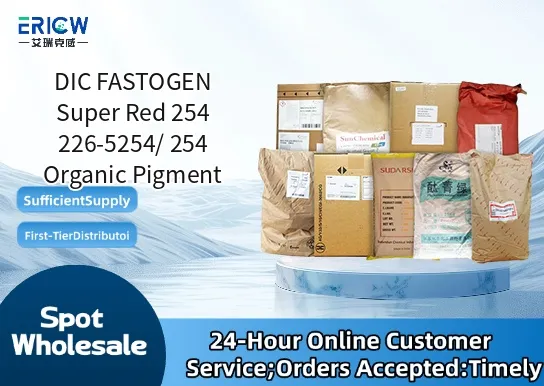
High chroma and excellent red shade purity with strong tinting strength.
Outstanding thermal stability suitable for high-temperature processing up to 240°C.
Good lightfastness and weather resistance in demanding outdoor applications.
Low volatile organic compound (VOC) content, supporting eco-friendly formulation requirements.
Excellent dispersibility in both solvent-based and water-based systems.
Automotive coatings including basecoats and clearcoat systems.
Industrial maintenance paints and coil coatings.
Plastic coloration for polyolefins and engineering resins.
Printing inks for packaging and label applications.
Architectural coatings requiring durable, fade-resistant red hues.
| Chemical Type | Quinacridone derivative |
| Product Form | Free-flowing powder |
| Appearance | Red-violet crystalline powder |
| Primary Applications | Coatings, plastics, inks |
| Key Features | High thermal stability, good dispersibility, low VOC |
| Benefits | Consistent shade, excellent batch-to-batch reproducibility |
| Regulatory Compliance | REACH registered; compliant with ISO 9001 manufacturing standards |
Q1: What are the primary application areas for DIC FASTOGEN Super Red 254?
A: This high-performance organic pigment is widely used in industrial coatings, automotive refinishes, and plastic coloration—particularly where strong red shade intensity, excellent heat stability, and good dispersibility are required.
Q2: Is DIC FASTOGEN Super Red 254 suitable for use in food-contact plastics or packaging inks?
A: It is not certified for direct food-contact applications. Customers requiring compliance with food safety regulations should consult DIC’s regulatory team for appropriate alternatives and confirm suitability based on final formulation and intended use conditions.
Q3: How does this pigment perform under thermal processing conditions?
A: DIC FASTOGEN Super Red 254 exhibits good thermal stability, making it suitable for standard plastic processing methods such as injection molding and extrusion—though optimal performance depends on residence time, temperature profile, and resin compatibility.
Q4: What dispersion recommendations are provided for optimal color development?
A: For best results, pre-dispersion using high-shear mixing or bead milling is recommended. Final dosage typically falls within a low-concentration range (e.g., 0.1% to 2% by weight), depending on substrate, desired opacity, and processing method.
Contact With Us:
E-mail: wangxingqiang@ericwchem.com
Have a Questions? Call Us:
Add:
Building A1, Jiete Industrial Park, Huangpu District, Guangzhou City, Guangdong Province, China