English
 Español
 tiếng việt
 русский
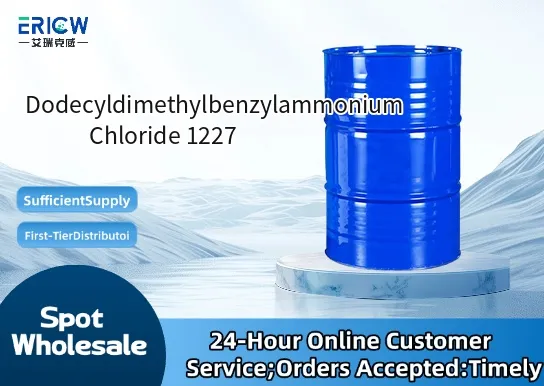
Highly effective cationic biocide with broad-spectrum activity against bacteria, fungi, algae, and enveloped viruses.
Excellent surface-active properties enabling strong adsorption onto organic and inorganic substrates.
Good thermal and pH stability across a wide range (pH 4–10), maintaining efficacy in diverse process conditions.
Low foaming profile suitable for high-shear industrial systems including cooling water and metalworking fluids.
Readily soluble in water and polar organic solvents, facilitating uniform dosing and formulation integration.
Microbiological control in industrial cooling water systems to prevent biofilm formation and microbiologically influenced corrosion (MIC).
Bio-stabilization of metalworking fluids, emulsions, and cutting oils to extend sump life and maintain fluid integrity.
Preservation of water-based paints, adhesives, coatings, and construction chemicals during storage and application.
Disinfectant active ingredient in hard-surface sanitizers and hospital-grade disinfectant formulations.
Algaecide and bactericide in swimming pool and spa water treatment programs.
| Chemical Type | Quaternary ammonium compound (QAC) |
| Product Form | Aqueous solution (typically 80% w/w active) |
| Appearance | Colorless to pale yellow clear liquid |
| Melting Point | Approx. −10 °C (varies with concentration) |
| Primary Applications | Industrial biocide, disinfectant, preservative |
| Key Features | Cationic surfactant, membrane-disrupting mode of action |
| Benefits | Rapid kill kinetics, low odor, non-oxidizing, compatible with common additives |
| Regulatory Compliance | Registered under EPA FIFRA (USA), approved under EU BPR (Biocidal Products Regulation) for PT2, PT3, PT4 applications |
| Common Compatible Systems | Suitability |
| Cooling Water Circuits (open & closed) | Highly Recommended – Effective at low dosage (50–200 ppm) with minimal scaling or corrosion impact |
| Water-Based Paints & Latex Emulsions | Recommended – Stable in neutral to mildly alkaline formulations; avoid high-ionic-strength systems without compatibility testing |
| Non-Oxidizing Biocide Blends (e.g., with DBNPA or glutaraldehyde) | Suitable – Synergistic combinations possible; confirm compatibility via jar testing prior to full-scale use |
| Hard-Surface Disinfectant Wipes & Sprays | Highly Recommended – Rapid efficacy on stainless steel, plastic, and sealed surfaces per EN 1276 and EN 13697 standards |
Q1: What is the CAS Registry Number for Dodecyldimethylbenzylammonium Chloride 1227?
A: The CAS number is 139-08-2.
Q2: What is the typical effective dosage range in industrial water systems?
A: Standard dosage ranges from 50 to 200 ppm active ingredient, depending on system load, microbial challenge, and retention time; continuous or slug dosing is recommended based on monitoring results.
Q3: How does 1227 compare to alkyl dimethyl ethylbenzyl ammonium chloride (e.g., ADBAC) in terms of efficacy and stability?
A: 1227 exhibits stronger hydrophobic interaction due to its C12 alkyl chain and benzyl group, offering enhanced membrane penetration and longer residual activity than shorter-chain analogues; it also demonstrates superior thermal stability versus ADBAC in high-temperature applications.
Q4: Is Dodecyldimethylbenzylammonium Chloride 1227 compliant with FDA or EU food-contact regulations?
A: It is not approved for direct food contact under FDA 21 CFR §178.1010; however, it may be used in non-food-contact sanitation of food-processing equipment when rinsed thoroughly and applied within specified limits per NSF/ANSI Standard 60 and EU Regulation (EC) No 396/2005 for migration control.
Q5: Does 1227 leach or migrate from treated surfaces into aqueous environments?
A: Migration potential is low under dry, ambient conditions; however, prolonged immersion or high-humidity exposure may result in measurable leaching—formulation binding agents and crosslinking technologies are recommended to minimize release in long-term antimicrobial coatings.
Contact With Us:
E-mail: wangxingqiang@ericwchem.com
Have a Questions? Call Us:
Add:
Building A1, Jiete Industrial Park, Huangpu District, Guangzhou City, Guangdong Province, China