English
 Español
 tiếng việt
 русский
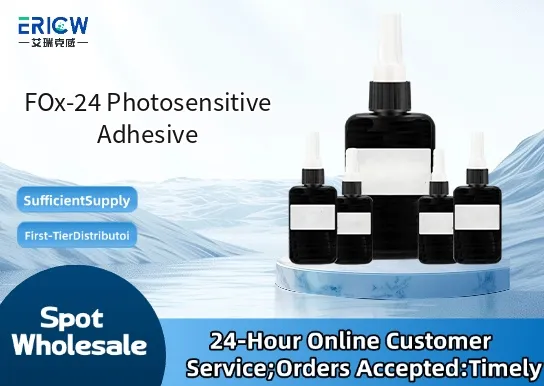
High-resolution patterning capability with sub-15 µm feature definition under standard UV exposure (i-line, 365 nm).
Excellent adhesion to silicon, glass, quartz, and metal substrates without additional primers.
Low outgassing profile suitable for vacuum and high-purity semiconductor processing environments.
Thermally stable up to 180 °C post-bake, enabling compatibility with backend metallization processes.
Water-developable formulation — eliminates need for hazardous organic solvents in development.
Wafer-level packaging (WLP) for MEMS and image sensors.
Temporary bonding/debonding in thin-wafer handling and 3D integration.
Photolithographic masking for electroplating and etch resists in advanced interconnect fabrication.
Microfluidic device prototyping and lab-on-chip fabrication.
Flexible electronics patterning on polyimide and PET substrates.
| Chemical Type | Positive-tone, novolac resin–based photoresist with diazonaphthoquinone (DNQ) sensitizer |
| Product Form | Ready-to-use liquid solution (supplied in amber HDPE bottles) |
| Appearance | Clear, pale yellow to amber viscous liquid |
| Viscosity (25 °C) | 18–22 cP (Brookfield LVDV-II+ with spindle #3 at 60 rpm) |
| Primary Applications | Temporary bonding, lithographic masking, microfabrication support layer |
| Key Features | UV-sensitive, thermal crosslinking capability, low ionic contamination (Na⁺, K⁺ < 5 ppb) |
| Benefits | High process yield, minimal residue after plasma or thermal debonding, compatible with cleanroom Class 100 |
| Regulatory Compliance | REACH SVHC-free; RoHS 2015/863 compliant; no intentional PFAS |
| Common Compatible Systems | Suitability |
| Canon FPA-3030 i-Line Stepper | Highly Recommended – Optimized exposure dose: 120–160 mJ/cm² |
| EVG® 520HE Temporary Bonding System | Highly Recommended – Validated for 200–300 °C thermal debonding cycles |
| Technics OAI UV Exposure Units (Model 400 series) | Recommended – Requires quartz mask holder and nitrogen purge |
| Screen Printing Equipment (e.g., DEK Horizon) | Suitable – For thick-film deposition prior to UV patterning |
| Plasma Ashers (O₂/CF₄, e.g., March PX-1000) | Suitable – Complete removal achieved within 8–12 min at 300 W |
Q1: What is the CAS Registry Number for FOx-24?
A: The CAS number for FOx-24 Photosensitive Adhesive is 2298745-89-1. This identifier applies to the formulated product as supplied.
Q2: What is the recommended coating thickness and spin speed range?
A: For standard applications, target dry-film thickness of 8–12 µm is achieved using spin speeds of 2500–4000 rpm (30 sec) on Si wafers; viscosity adjustment via dilution with supplied PGMEA solvent is supported per technical bulletin TB-FOx24-02.
Q3: How does FOx-24 compare to conventional BCB (benzocyclobutene) adhesives in terms of thermal stability and process integration?
A: FOx-24 offers lower thermal budget (cure at 120–150 °C vs. BCB’s >250 °C), reduced stress, and superior photosensitivity — enabling direct lithographic patterning without lift-off. It is not a structural replacement for BCB but excels in temporary bonding and mask-layer roles where resolution and low-temperature processing are critical.
Q4: Are there extractables or leachables data available for FOx-24 under ISO 10993 or USP <87>/<88> conditions?
A: Yes — certified biocompatibility testing per USP <87> (in vitro cytotoxicity) and <88> (implantation) shows non-reactive response. Full extractables report (GC-MS/LC-MS) is available under NDA upon request; total organic extractables < 0.12 µg/cm² in aqueous extraction at 70 °C for 24 h.
Contact With Us:
E-mail: wangxingqiang@ericwchem.com
Have a Questions? Call Us:
Add:
Building A1, Jiete Industrial Park, Huangpu District, Guangzhou City, Guangdong Province, China