English
 Español
 tiếng việt
 русский
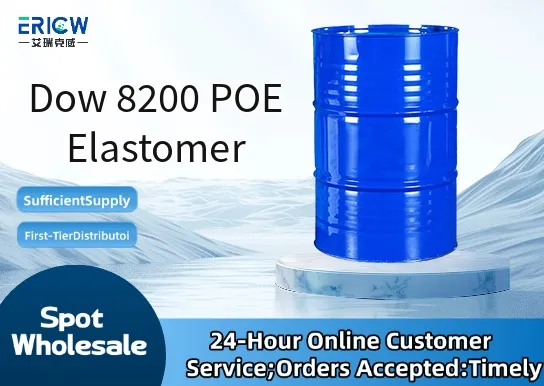
Excellent melt processability for high-speed extrusion and injection molding
Outstanding low-temperature flexibility and impact resistance down to –40 °C
Superior compatibility with polypropylene (PP) and polyethylene (PE) for robust thermoplastic blends
Good UV and thermal stability, enabling durable outdoor applications
Low extractables and excellent colorability for demanding aesthetic and regulatory requirements
Automotive interior trim including door panels, instrument bezels, and soft-touch overlays
Consumer appliance components such as dishwasher tubs, washing machine parts, and refrigerator seals
Packaging closures and flexible lids requiring high seal integrity and hinge durability
Medical device overmolding for ergonomic, non-slip grips on handheld instruments
Industrial hoses and fluid-handling components requiring chemical resistance and flex fatigue performance
| Chemical Type | Polyolefin Elastomer (POE), ethylene-octene copolymer |
| Product Form | Natural-colored pellets |
| Appearance | Free-flowing, semi-crystalline granules |
| Primary Applications | Thermoplastic elastomer (TPE) blends, PP/PE modification, soft-touch overmolding |
| Key Features | High elasticity, low hardness (Shore A 65–75), excellent tensile set recovery |
| Benefits | Enables lightweight part design, reduces cycle time, improves recyclability vs. TPU or TPV |
| Density (ASTM D792) | 0.870–0.875 g/cm³ |
| Melt Flow Rate (190 °C/2.16 kg, ASTM D1238) | 1.0–2.0 g/10 min |
Q1: What is the primary function of Dow 8200 POE Elastomer in polymer blends?
A: Dow 8200 POE Elastomer is primarily used as a toughening agent and impact modifier in polyolefin-based systems, enhancing ductility, low-temperature performance, and melt elasticity without significantly compromising stiffness or processability.
Q2: Is Dow 8200 compatible with polypropylene (PP) and polyethylene (PE) matrices?
A: Yes, Dow 8200 exhibits excellent compatibility with both homopolymer and copolymer polypropylene, as well as various grades of polyethylene—including HDPE, LDPE, and LLDPE—due to its ethylene-octene copolymer architecture and balanced crystallinity.
Q3: How does Dow 8200 differ from conventional EPDM or EPR impact modifiers?
A: Unlike diene-based elastomers, Dow 8200 is a saturated polyolefin elastomer with no cure sites, offering superior long-term thermal and oxidative stability, consistent rheology during processing, and no risk of scorch or crosslinking in thermoplastic applications.
Q4: Can Dow 8200 be used in food-contact or medical-grade compounds?
A: Dow 8200 is manufactured under controlled conditions suitable for indirect food-contact applications where permitted by local regulatory frameworks; however, final compliance depends on the full formulation, processing conditions, and applicable regional requirements—validation testing is recommended for regulated end uses.
Q5: What processing methods are recommended for incorporating Dow 8200 into compound formulations?
A: Dow 8200 is readily processed via standard melt-compounding techniques including twin-screw extrusion and internal mixing; it typically requires no pre-drying and demonstrates good dispersion characteristics across a range of shear and temperature profiles common in polyolefin compounding.
Contact With Us:
E-mail: wangxingqiang@ericwchem.com
Have a Questions? Call Us:
Add:
Building A1, Jiete Industrial Park, Huangpu District, Guangzhou City, Guangdong Province, China