English
 Español
 tiếng việt
 русский
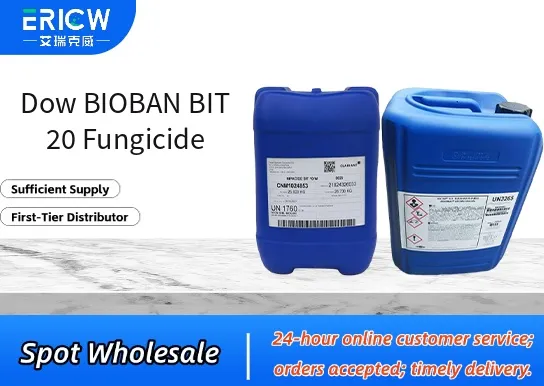
Broad-spectrum fungicidal activity against bacteria, fungi, and algae in water-based systems.
Stable across a wide pH range (pH 4–10), ensuring compatibility with diverse formulations.
Low volatility and minimal odor, supporting safe handling and regulatory compliance.
Effective at low use concentrations (typically 50–200 ppm), offering cost-efficient protection.
Non-oxidizing chemistry that avoids corrosion issues commonly associated with biocides like chlorine or isothiazolones.
Latex paints and architectural coatings to prevent in-can spoilage and dry-film discoloration.
Adhesives and sealants for microbial stabilization during storage and application.
Water-based inks used in flexographic and gravure printing processes.
Industrial metalworking fluids to control bacterial and fungal growth under high-humidity conditions.
Construction chemicals including grouts, mortars, and tile adhesives.
| Chemical Type | 1,2-Benzisothiazolin-3-one (BIT) |
| Product Form | Aqueous solution |
| Appearance | Clear, pale yellow liquid |
| Active Ingredient Content | 20.0 ± 1.0 wt% BIT |
| pH (1% aqueous solution) | 6.0 – 8.0 |
| Density (at 20°C) | 1.04 – 1.08 g/cm³ |
| Solubility | Completely miscible with water and common polar solvents |
| Primary Applications | Preservative for water-based industrial and consumer products |
Q1: What is the primary mode of action of Dow BIOBAN BIT 20?
A: Dow BIOBAN BIT 20 functions as a broad-spectrum biocide through inhibition of essential cellular processes in fungi and bacteria, primarily by interfering with membrane integrity and key enzymatic activity. Its active ingredient, 1,2-benzisothiazolin-3-one (BIT), provides rapid and persistent antimicrobial efficacy in aqueous systems.
Q2: In which types of industrial formulations is Dow BIOBAN BIT 20 commonly used?
A: It is widely employed in water-based coatings, adhesives, sealants, construction chemicals, metalworking fluids, and household and institutional cleaning products—particularly where long-term preservation against microbial spoilage is required during storage and use.
Q3: Is Dow BIOBAN BIT 20 compatible with common formulation ingredients such as surfactants and thickeners?
A: Yes, Dow BIOBAN BIT 20 demonstrates good compatibility with many anionic, nonionic, and amphoteric surfactants, as well as common rheology modifiers—including associative thickeners and cellulose derivatives—under typical pH and temperature conditions encountered in industrial formulations.
Q4: How should Dow BIOBAN BIT 20 be incorporated into a formulation?
A: It is typically added during the final stage of manufacturing, after pH adjustment and cooling, to minimize thermal degradation. For optimal dispersion and stability, it can be introduced neat or pre-diluted in water or a compatible solvent, depending on the formulation’s polarity and viscosity.
Q5: What safety and handling precautions are recommended for Dow BIOBAN BIT 20?
A: As with all industrial biocides, appropriate personal protective equipment (PPE) including gloves and eye protection should be worn during handling. Avoid inhalation of mists or prolonged skin contact. Formulators must consult the latest Safety Data Sheet (SDS) and comply with local occupational health and environmental regulations.
Contact With Us:
E-mail: wangxingqiang@ericwchem.com
Have a Questions? Call Us:
Add:
Building A1, Jiete Industrial Park, Huangpu District, Guangzhou City, Guangdong Province, China