English
 Español
 tiếng việt
 русский
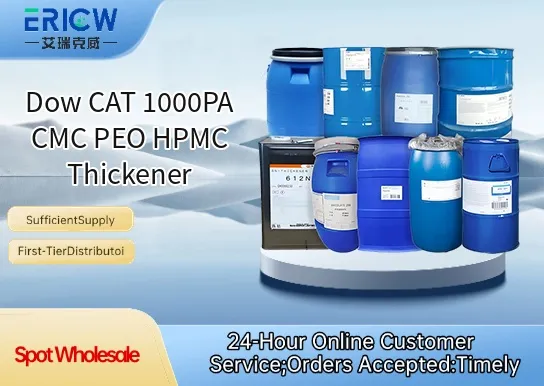
Multi-polymer synergistic formulation delivering enhanced rheology control across diverse pH and ionic strength conditions.
High thickening efficiency with low dosage requirements, reducing formulation cost and improving batch consistency.
Excellent water solubility and rapid dispersion without lumping, enabling efficient cold-water hydration.
Improved suspension stability for insoluble particles in aqueous systems, minimizing sedimentation over shelf life.
Compatible with common surfactants, electrolytes, and preservatives used in industrial and consumer formulations.
Architectural coatings including interior and exterior latex paints.
Industrial maintenance coatings and protective primers.
Agrochemical suspensions and emulsifiable concentrates (ECs).
Construction adhesives and tile-setting mortars.
Household and institutional cleaning products (e.g., liquid detergents, disinfectant sprays).
| Chemical Type | Blended polymer system: Carboxymethyl cellulose (CMC) + Polyethylene oxide (PEO) + Hydroxypropyl methylcellulose (HPMC) |
| Product Form | Free-flowing white to off-white granular powder |
| Appearance | Uniform granules, no visible impurities or discoloration |
| Primary Applications | Rheology modifier and suspension stabilizer in water-based systems |
| Key Features | pH stability (4–12), non-ionic character, low foaming profile |
| Benefits | Reduced sag resistance, improved brushability/rollability, extended shelf-life stability |
| Storage Conditions | Store in cool, dry location; protect from moisture and direct sunlight |
| Recommended Dosage Range | 0.1–0.8 wt% (based on total formulation weight) |
Q1: What is the primary functional role of Dow CAT 1000PA in formulations?
A: Dow CAT 1000PA is a multi-polymer thickening and rheology-modifying system designed to deliver synergistic viscosity enhancement, improved suspension stability, and enhanced film-forming characteristics—particularly in aqueous-based industrial and household cleaning products, coatings, and personal care emulsions.
Q2: How does this thickener perform in high-electrolyte or hard-water environments?
A: The combination of modified cellulose derivatives (CMC, HPMC) and polyethylene oxide (PEO) provides improved tolerance to ionic strength compared to many single-polymer thickeners, supporting consistent viscosity performance in formulations containing surfactants, builders, or water with moderate hardness—though optimal stability is achieved with formulation-specific optimization.
Q3: Is Dow CAT 1000PA compatible with common anionic and nonionic surfactants?
A: Yes—this thickener system demonstrates broad compatibility with widely used anionic (e.g., LAS, AES), nonionic (e.g., alcohol ethoxylates), and amphoteric surfactants. Compatibility should be verified in final formulations due to potential interactions with cationic species or highly associative thickeners.
Q4: What is the recommended method for incorporating Dow CAT 1000PA into aqueous systems?
A: For best dispersion and hydration, gradual addition under moderate shear (e.g., using a high-shear mixer or rotor-stator) is recommended—preferably as a pre-dispersed slurry in glycerin, propylene glycol, or a portion of formulation water—to minimize agglomeration and ensure uniform thickening development.
Contact With Us:
E-mail: wangxingqiang@ericwchem.com
Have a Questions? Call Us:
Add:
Building A1, Jiete Industrial Park, Huangpu District, Guangzhou City, Guangdong Province, China