English
 Español
 tiếng việt
 русский
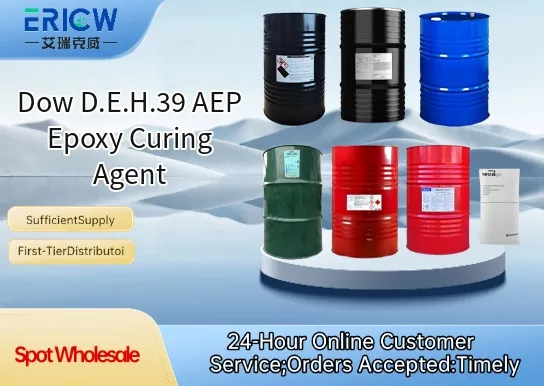
Fast-reacting aliphatic amine curing agent for room-temperature and elevated-temperature epoxy systems.
Delivers excellent flexibility and impact resistance in cured epoxy formulations.
Low viscosity enables easy handling, metering, and mixing with standard epoxy resins.
Provides good chemical resistance, particularly to alkalis and solvents.
Non-blushing formulation ensures consistent surface appearance and adhesion performance.
Structural adhesives for automotive and transportation assembly.
Coatings for industrial flooring and protective linings.
Electrical encapsulants and potting compounds.
Composite matrix resins for wind blade and aerospace components.
Repair mortars and grouts for concrete infrastructure.
| Chemical Type | Aliphatic polyamine |
| Product Form | Liquid |
| Appearance | Clear, pale yellow liquid |
| Primary Applications | Epoxy adhesives, coatings, composites, and encapsulants |
| Key Features | Room-temperature cure capability, low exotherm, flexible cured film |
| Benefits | Improved toughness, reduced brittleness, enhanced processing window |
| Storage Stability | 12 months at 25 °C in unopened original container |
| Handling Precautions | Use in well-ventilated areas; wear appropriate PPE (gloves, goggles, respirator) |
Q1: What is the primary chemical class and functional mechanism of D.E.H.39 AEP?
A: D.E.H.39 AEP is an amine-terminated polyether curing agent designed for epoxy resins. It functions via nucleophilic addition to epoxide groups, enabling ambient- or elevated-temperature cure profiles with low exotherm and reduced volatility compared to traditional aliphatic amines.
Q2: How does D.E.H.39 AEP compare to conventional amine hardeners in terms of handling and safety?
A: D.E.H.39 AEP exhibits significantly lower vapor pressure and reduced skin sensitization potential relative to many low-molecular-weight aliphatic amines. Its viscous liquid form and moderate reactivity contribute to improved workplace handling, longer pot life, and reduced respiratory irritation risk—though standard industrial hygiene practices (gloves, ventilation, eye protection) remain essential.
Q3: What types of epoxy resins is D.E.H.39 AEP typically compatible with?
A: D.E.H.39 AEP is broadly compatible with standard liquid and solid bisphenol-A and bisphenol-F based epoxy resins, as well as novolac epoxies. It is especially valued in formulations requiring flexibility, adhesion to challenging substrates, or resistance to thermal cycling—common in coatings, adhesives, and composite matrix systems.
Q4: What are typical processing considerations for formulations using D.E.H.39 AEP?
A: Due to its polymeric nature and moderate reactivity, D.E.H.39 AEP generally enables extended working time at room temperature while supporting full cure at mild elevated temperatures (e.g., 60–100 °C). Formulators should account for its viscosity impact on mixing efficiency and consider compatibility testing when blending with reactive diluents or fillers.
Contact With Us:
E-mail: wangxingqiang@ericwchem.com
Have a Questions? Call Us:
Add:
Building A1, Jiete Industrial Park, Huangpu District, Guangzhou City, Guangdong Province, China