English
 Español
 tiếng việt
 русский
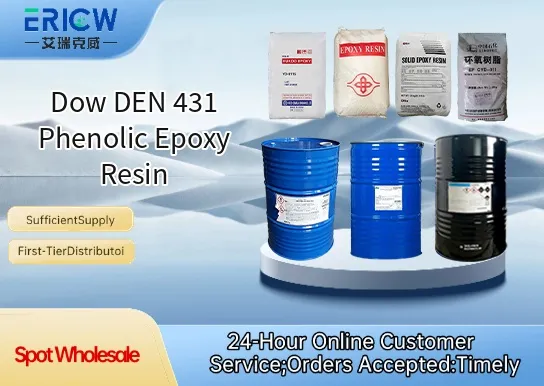
High functionality phenolic epoxy resin with multiple epoxide groups per molecule for enhanced crosslink density.
Excellent thermal stability and char yield, supporting performance in elevated-temperature environments.
Superior chemical resistance—particularly to acids, alkalis, and solvents—after full cure.
Low viscosity relative to other high-functionality phenolic epoxies, enabling improved processability and filler loading.
Designed for compatibility with conventional amine and anhydride curing agents used in high-performance composites and encapsulants.
Aerospace composite matrices requiring flame, smoke, and toxicity (FST) compliance.
Electrical encapsulation and potting compounds for high-voltage power electronics.
High-performance adhesives in structural bonding of metal and composite substrates.
Carbon fiber prepregs for defense and industrial tooling applications.
Fire-resistant printed circuit board (PCB) laminates and bonding films.
| Chemical Type | Phenolic epoxy novolac resin |
| Product Form | Off-white to light tan solid flakes or powder |
| Appearance | Free-flowing crystalline solid |
| Epoxy Equivalent Weight (EEW) | 170–190 g/eq |
| Softening Point | 85–95 °C |
| Functionality (Average Epoxide Groups per Molecule) | ≥ 4.0 |
| Volatiles Content | < 0.5 wt% |
| Primary Applications | High-temperature composites, electrical insulation, fire-safe laminates |
Q1: What distinguishes DEN 431 from standard bisphenol-A epoxy resins?
A: DEN 431 is a novolac-type phenolic epoxy resin, offering significantly higher functionality and aromatic content than conventional bisphenol-A epoxies. This results in enhanced thermal stability, improved chemical resistance—especially to strong acids and solvents—and superior char formation at elevated temperatures.
Q2: Is DEN 431 suitable for high-temperature curing applications?
A: Yes—DEN 431 is specifically designed for high-performance thermoset systems requiring elevated cure temperatures (typically above 150 °C). Its phenolic novolac backbone enables robust crosslinking with amine or anhydride hardeners, yielding matrices with excellent retention of mechanical properties under prolonged thermal stress.
Q3: How does DEN 431 perform in flame-retardant composite formulations?
A: Due to its high aromatic density and char-forming tendency, DEN 431 contributes inherent flame resistance and reduced heat release in cured composites. It is often selected as a base resin in aerospace, electronics encapsulation, and industrial linings where low smoke and high limiting oxygen index (LOI) are critical design criteria.
Q4: Can DEN 431 be blended with other epoxy resins to modify performance?
A: Yes—DEN 431 is commonly blended with lower-functionality epoxies (e.g., DGEBA or hydrogenated bisphenol-A types) to balance reactivity, toughness, and thermal performance. Blending allows formulators to tailor glass transition temperature, viscosity, and crosslink density without compromising essential high-temperature integrity.
Contact With Us:
E-mail: wangxingqiang@ericwchem.com
Have a Questions? Call Us:
Add:
Building A1, Jiete Industrial Park, Huangpu District, Guangzhou City, Guangdong Province, China