English
 Español
 tiếng việt
 русский
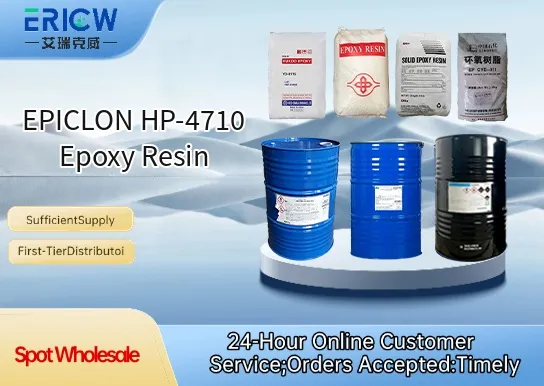
Highly reactive liquid epoxy resin with low viscosity for excellent processability and filler wetting.
Designed for high-gloss, low-haze cured films with superior surface aesthetics and clarity.
Offers enhanced thermal stability and improved chemical resistance compared to conventional bisphenol-A based resins.
Compatible with standard amine and anhydride curing agents, enabling flexible formulation design.
Low chloride content ensures reduced corrosion risk in metal-coated electronic and automotive applications.
High-performance protective coatings for automotive underhood components.
Electrical insulating varnishes for motors, transformers, and coil impregnation.
Powder coating formulations requiring smooth finish and rapid flow characteristics.
Electronic encapsulants and potting compounds demanding low ionic impurities.
Composite matrix resins for carbon fiber-reinforced structural parts.
| Chemical Type | Liquid bisphenol-F type epoxy resin |
| Product Form | Clear, low-viscosity liquid |
| Appearance | Colorless to pale yellow transparent liquid |
| Epoxy Equivalent Weight (EEW) | 165–175 g/eq |
| Viscosity (25°C) | 8,000–12,000 mPa·s |
| Chloride Content | ≤ 300 ppm |
| Volatiles Content | ≤ 0.3 wt% |
| Storage Stability (25°C) | ≥ 12 months in sealed container |
Q1: What is the primary functional advantage of EPICLON HP-4710 compared to conventional bisphenol-A epoxy resins?
A: EPICLON HP-4710 is a highly branched, multi-functional epoxy resin designed to deliver significantly enhanced thermal stability, chemical resistance, and crosslink density in cured systems—without requiring high-temperature post-curing. Its molecular architecture supports superior glass transition temperature (Tg) development and reduced moisture absorption versus standard DGEBA-type resins.
Q2: Is HP-4710 suitable for high-performance composite applications such as aerospace or wind turbine blade matrices?
A: Yes—HP-4710 is widely selected for structural composites where elevated Tg, dimensional stability under thermal cycling, and long-term durability are critical. It demonstrates excellent compatibility with carbon and glass fibers, and its low melt viscosity enables efficient resin infusion and prepreg processing.
Q3: Which types of curing agents are most commonly used with HP-4710?
A: HP-4710 performs well with both aromatic amines (e.g., DDS, m-PDA) and anhydrides (e.g., MTHPA, HHPA), particularly in high-temperature cure schedules. It also shows good reactivity with latent catalysts such as imidazoles and dicyandiamide derivatives for one-component, heat-activated systems.
Q4: How does HP-4710 contribute to flame retardancy in formulated systems?
A: While HP-4710 itself is not inherently halogen-free or self-extinguishing, its high aromatic content and char-forming tendency support improved flame retardancy when combined with synergistic additives (e.g., phosphorus-based flame retardants or metal hydroxides). Formulators often leverage this behavior to reduce total additive loading while maintaining UL 94 V-0 or similar performance targets.
Contact With Us:
E-mail: wangxingqiang@ericwchem.com
Have a Questions? Call Us:
Add:
Building A1, Jiete Industrial Park, Huangpu District, Guangzhou City, Guangdong Province, China