English
 Español
 tiếng việt
 русский
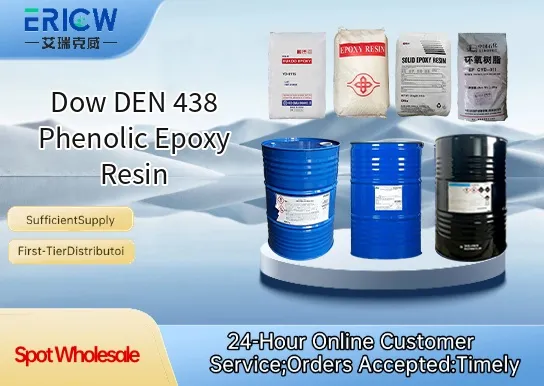
Highly crosslinkable phenolic epoxy structure delivering exceptional thermal stability and chemical resistance.
Low viscosity in molten state enabling excellent processability for filament winding, pultrusion, and compression molding.
Superior adhesion to carbon fiber, glass fiber, and metallic substrates without requiring additional primers.
Excellent electrical insulation properties with low dielectric loss at elevated temperatures.
Designed for high-performance composites requiring UL 94 V-0 rated flame retardancy when formulated with appropriate hardeners.
Aerospace structural components including radomes, engine nacelles, and interior panels.
High-voltage electrical insulators and bushings for power transmission equipment.
Friction materials and brake linings for commercial and industrial braking systems.
High-temperature composite tooling matrices for autoclave and RTM manufacturing processes.
Chemical-resistant tank linings and pipe coatings for aggressive industrial environments.
| Chemical Type | Phenolic epoxy novolac resin |
| Product Form | Pale yellow to amber solid pellets |
| Appearance | Free-flowing granular solid at room temperature |
| Softening Point (ASTM E28) | 85–95 °C |
| Epoxy Equivalent Weight (EEW) | 170–190 g/eq |
| Hydroxyl Number (ASTM D4294) | 480–540 mg KOH/g |
| Volatiles Content (ASTM D229) | < 0.5 wt% |
| Key Features | High functionality, thermally stable, low melt viscosity, halogen-free |
Q1: What distinguishes DEN 438 from standard bisphenol-A epoxy resins?
A: DEN 438 is a phenolic novolac-based epoxy resin, offering significantly higher functionality (average epoxide functionality >3.5) and greater thermal and chemical resistance compared to conventional diglycidyl ether of bisphenol-A (DGEBA) resins. Its aromatic novolac backbone enhances crosslink density, making it especially suitable for high-performance coatings and composites requiring elevated temperature stability.
Q2: Which curing agents are commonly used with DEN 438?
A: DEN 438 is typically cured with multifunctional amines (e.g., diaminodiphenyl sulfone or aromatic polyamines), anhydrides (e.g., methylhexahydrophthalic anhydride), or phenolic resins. Selection depends on the target performance profile—such as glass transition temperature, chemical resistance, or processing window—and must account for its high epoxide equivalent weight and reactivity profile.
Q3: Is DEN 438 suitable for food-contact coating applications?
A: DEN 438 is not inherently compliant for direct food-contact use in its raw form. Formulators intending food-contact applications must validate the final cured system against applicable regulatory requirements—including migration testing and compliance with regional food-contact material regulations—using approved hardeners, additives, and full cure protocols.
Q4: How does viscosity affect processing, and what handling precautions are recommended?
A: DEN 438 exhibits relatively high melt viscosity at elevated temperatures, which may require preheating for uniform mixing and degassing. It is advisable to process under controlled conditions—avoiding prolonged exposure to moisture and minimizing thermal history prior to curing—to preserve epoxy functionality and ensure consistent crosslinking.
Contact With Us:
E-mail: wangxingqiang@ericwchem.com
Have a Questions? Call Us:
Add:
Building A1, Jiete Industrial Park, Huangpu District, Guangzhou City, Guangdong Province, China