English
 Español
 tiếng việt
 русский
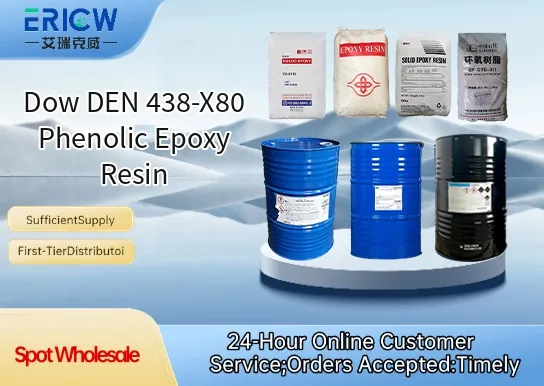
High thermal stability derived from phenolic novolac backbone for sustained performance at elevated temperatures.
Enhanced chemical resistance to strong acids, alkalis, and solvents in aggressive industrial environments.
High functionality (average epoxy equivalent weight ~175–195 g/eq) enabling dense crosslinking and superior mechanical rigidity.
Excellent adhesion to metals, composites, and cured epoxy substrates without primer requirement.
Low volatility and minimal outgassing—suitable for vacuum and aerospace-grade encapsulation applications.
Aerospace composite matrices for primary and secondary structural components.
High-performance electrical laminates in printed circuit boards (PCBs) requiring UL 94 V-0 rating.
Thermal management encapsulants for power electronics and LED modules.
Chemical-resistant tank linings and pipe coatings for oil & gas infrastructure.
High-temperature adhesive formulations for metal-to-metal bonding in automotive powertrain systems.
| Chemical Type | Phenolic Novolac Epoxy Resin |
| Product Form | Off-white to light tan solid pellets |
| Appearance | Free-flowing crystalline granules |
| Epoxy Equivalent Weight (EEW) | 175–195 g/eq |
| Softening Point | 85–95 °C |
| Volatility (Loss on Heating at 150 °C, 2 hrs) | < 0.5 wt% |
| Chlorine Content | < 100 ppm |
| Key Features | High Tg, low moisture absorption, excellent char yield |
Q1: What distinguishes DEN 438-X80 from standard bisphenol-A epoxy resins?
A: DEN 438-X80 is a phenolic novolac-based epoxy resin, offering significantly higher functionality and aromatic density than conventional bisphenol-A epoxies. This results in enhanced thermal stability, chemical resistance—particularly to strong acids and solvents—and improved crosslink density in cured systems.
Q2: Is DEN 438-X80 suitable for high-temperature coating applications?
A: Yes—it is commonly selected for demanding protective coatings where continuous service temperatures exceed those supported by standard epoxies, such as in industrial linings, flue gas desulfurization (FGD) systems, and refinery equipment. Its phenolic novolac backbone contributes to superior char formation and oxidative stability.
Q3: How is DEN 438-X80 typically cured?
A: It is generally cured with high-functionality amine or anhydride hardeners, often requiring elevated temperature post-cures to achieve optimal network development. Catalysts such as tertiary amines or imidazoles may be used to moderate reactivity, especially in formulated systems requiring extended pot life.
Q4: Can DEN 438-X80 be blended with other epoxy resins?
A: Yes—blending with lower-functionality epoxies (e.g., DGEBA-type resins) is a common practice to balance performance attributes such as toughness, viscosity, and cure speed. Compatibility should be verified experimentally, as phase separation may occur depending on molecular weight distribution and formulation conditions.
Contact With Us:
E-mail: wangxingqiang@ericwchem.com
Have a Questions? Call Us:
Add:
Building A1, Jiete Industrial Park, Huangpu District, Guangzhou City, Guangdong Province, China