English
 Español
 tiếng việt
 русский
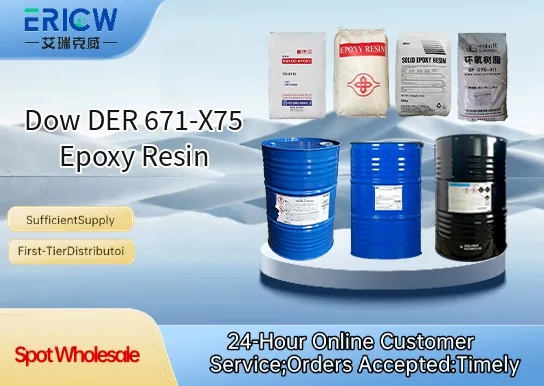
High-purity, low-chloride bisphenol-A based liquid epoxy resin for enhanced electrical insulation performance.
Optimized viscosity profile (12,000–16,000 cP at 25 °C) enabling excellent processability in casting and impregnation applications.
Consistent epoxy equivalent weight (183–192 g/eq) ensuring reliable stoichiometric control in formulated systems.
Low volatile organic content (VOC < 0.1%) supporting compliance with stringent environmental and workplace safety requirements.
Excellent compatibility with standard amine and anhydride curing agents for broad formulation flexibility.
High-voltage electrical insulation systems, including cast coil windings and bushing encapsulants.
Transformer and reactor potting compounds requiring thermal stability and dielectric integrity.
Industrial-grade encapsulants for power electronics and semiconductor modules.
Electrical laminates and prepregs for printed circuit board (PCB) substrates demanding low ionic contamination.
Specialty adhesives for bonding ceramic-to-metal assemblies in aerospace and energy infrastructure.
| Chemical Type | Bisphenol-A epoxy resin |
| Product Form | Clear to pale yellow liquid |
| Appearance | Homogeneous, transparent liquid with minimal haze |
| Epoxy Equivalent Weight (EEW) | 183–192 g/eq |
| Viscosity (25 °C) | 12,000–16,000 cP |
| Chlorine Content (Total Cl) | ≤ 750 ppm |
| Volatiles Content | < 0.1 wt% |
| Primary Applications | Electrical insulation, potting, casting, and encapsulation |
Q1: What is the primary functional role of Dow DER 671-X75 in epoxy formulations?
A: Dow DER 671-X75 is a reactive liquid diluent designed to reduce viscosity and improve processability of standard bisphenol-A epoxy resins without significantly compromising crosslink density or thermal performance. It participates directly in the curing reaction as a co-monomer.
Q2: Is Dow DER 671-X75 suitable for high-gloss, UV-stable coatings?
A: While it enhances flow and leveling, Dow DER 671-X75 is not inherently UV-stable and may contribute to yellowing under prolonged UV exposure. For demanding exterior or high-gloss decorative coatings, formulators typically combine it with UV absorbers and HALS stabilizers—or consider alternative aliphatic diluents.
Q3: How does Dow DER 671-X75 compare to non-reactive diluents in terms of VOC content and regulatory compliance?
A: As a reactive diluent, Dow DER 671-X75 becomes chemically bound during cure, resulting in negligible VOC emissions compared to solvent-based or non-reactive diluents. This supports compliance with low-VOC regulatory frameworks applicable to industrial coatings and adhesives.
Q4: Can Dow DER 671-X75 be used in electrically insulating encapsulation systems?
A: Yes—it is commonly incorporated into medium- to high-voltage encapsulants and potting compounds where reduced viscosity aids air release and substrate wetting, while maintaining acceptable dielectric strength and volume resistivity after full cure.
Contact With Us:
E-mail: wangxingqiang@ericwchem.com
Have a Questions? Call Us:
Add:
Building A1, Jiete Industrial Park, Huangpu District, Guangzhou City, Guangdong Province, China