English
 Español
 tiếng việt
 русский
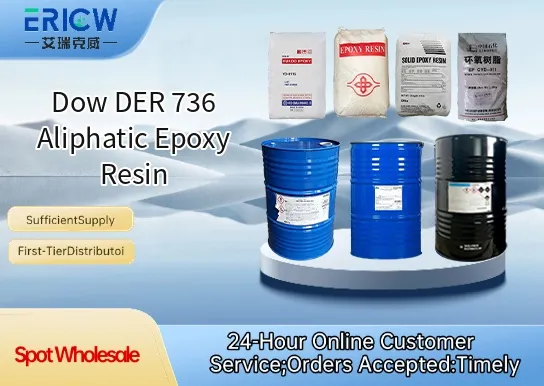
Low viscosity aliphatic diglycidyl ether offering excellent flow and wetting characteristics.
UV-stable formulation with superior resistance to yellowing and gloss retention under outdoor exposure.
Fast reactivity with amines and anhydrides, enabling efficient cure at ambient or elevated temperatures.
Low volatility and high flash point, supporting safer handling and compliance with industrial hygiene standards.
Compatible with standard epoxy hardeners, diluents, and fillers for versatile formulation flexibility.
UV-resistant clear coatings for architectural concrete and decorative flooring systems.
High-clarity encapsulants and potting compounds for optical and electronic components.
Adhesives requiring weatherability and low-temperature flexibility in transportation and aerospace assemblies.
Composite matrices for fiber-reinforced plastics exposed to sunlight and moisture.
Repair mortars and grouts where color stability and rapid turnaround are critical.
| Chemical Type | Aliphatic diglycidyl ether |
| Product Form | Liquid resin |
| Appearance | Colorless to pale yellow, transparent liquid |
| Epoxy Equivalent Weight (EEW) | 155–165 g/eq |
| Viscosity at 25°C | 80–120 cP |
| Flash Point (Tag Closed Cup) | ≥105°C |
| Density at 25°C | 0.94–0.96 g/cm³ |
| Refractive Index (25°C) | 1.435–1.445 |
Q1: What distinguishes Dow DER 736 from conventional aromatic epoxy resins?
A: Dow DER 736 is an aliphatic glycidyl ether-based epoxy resin, offering significantly improved UV stability and color retention compared to aromatic epoxies. It provides low viscosity, excellent flexibility, and reduced brittleness in cured systems—making it especially suitable for applications requiring long-term clarity and weather resistance.
Q2: Is Dow DER 736 compatible with common amine and anhydride curing agents?
A: Yes, Dow DER 736 readily reacts with a broad range of amine hardeners—including aliphatic, cycloaliphatic, and polyamide types—as well as anhydride initiators. Its low steric hindrance and high epoxide reactivity support efficient crosslinking, though cure schedules may require optimization depending on the selected hardener and end-use requirements.
Q3: Can Dow DER 736 be used in coatings for outdoor or UV-exposed substrates?
A: Yes—its aliphatic backbone imparts inherent resistance to yellowing and gloss loss under UV exposure, making it a preferred modifier or primary resin in high-performance UV-stable coatings, clear finishes, and protective topcoats for architectural, marine, and industrial applications.
Q4: How does Dow DER 736 affect pot life and cure speed in formulated systems?
A: Due to its relatively low viscosity and reactive epoxide functionality, Dow DER 736 typically extends working time when blended with higher-functionality resins, while still enabling efficient cure at ambient or elevated temperatures. Actual pot life depends on hardener selection, temperature, and formulation composition—not a fixed value.
Contact With Us:
E-mail: wangxingqiang@ericwchem.com
Have a Questions? Call Us:
Add:
Building A1, Jiete Industrial Park, Huangpu District, Guangzhou City, Guangdong Province, China