English
 Español
 tiếng việt
 русский
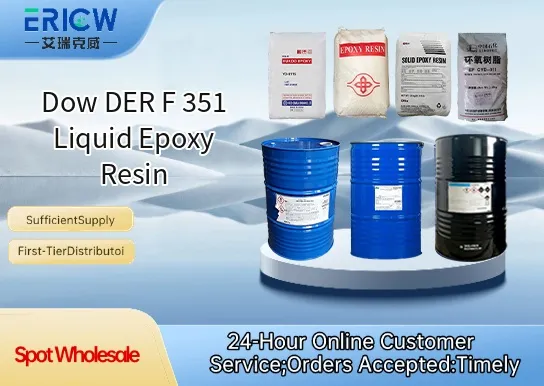
Low-viscosity liquid epoxy resin enabling excellent flow, wetting, and air release in processing.
High purity with low chloride content for improved electrical insulation and corrosion resistance.
Compatible with standard amine, anhydride, and phenolic curing agents for flexible formulation design.
Consistent batch-to-batch performance supported by Dow’s stringent quality control and traceability.
Optimized for ambient or elevated temperature cure systems without requiring reactive diluents.
Electrical encapsulation and potting of transformers, sensors, and power electronics.
Structural adhesives for aerospace, automotive, and industrial bonding applications.
Composite matrix resin for filament-wound pressure vessels and pultruded profiles.
High-performance coatings for metal substrates requiring chemical and abrasion resistance.
Tooling resins for molds used in composite manufacturing and prototyping.
| Chemical Type | Bisphenol-A based liquid epoxy resin |
| Product Form | Clear to pale yellow liquid |
| Appearance | Homogeneous, transparent, low-viscosity liquid |
| Epoxy Equivalent Weight (EEW) | 185–192 g/eq |
| Viscosity at 25°C | 12–16 Pa·s (12,000–16,000 cP) |
| Chloride Content | ≤ 500 ppm |
| Volatiles Content | ≤ 0.3 wt% |
| Primary Applications | Encapsulation, adhesives, composites, coatings |
Q1: What is the primary functional role of Dow DER F 351 in epoxy formulations?
A: Dow DER F 351 is a liquid bisphenol-F-based epoxy resin designed primarily as a reactive diluent and viscosity modifier. It reduces formulation viscosity without significantly compromising crosslink density or thermal performance, enabling improved processability in casting, potting, and coating applications.
Q2: How does Dow DER F 351 compare to bisphenol-A epoxy resins like DER 331 in terms of reactivity and flexibility?
A: Due to its bisphenol-F backbone, Dow DER F 351 exhibits higher reactivity and lower viscosity than standard bisphenol-A resins. It also imparts enhanced chemical resistance and slightly greater flexibility in the cured network, making it suitable for applications requiring improved toughness and thermal shock resistance.
Q3: Is Dow DER F 351 compatible with common amine and anhydride curing agents?
A: Yes, Dow DER F 351 is broadly compatible with aliphatic and aromatic amines, as well as cyclic anhydrides. Its reactivity profile allows for flexible cure scheduling — from ambient-cure systems using accelerated amines to elevated-temperature anhydride cures — while maintaining good adhesion and mechanical integrity.
Q4: Can Dow DER F 351 be used in food-contact or potable water applications?
A: Dow DER F 351 is not pre-approved for direct food-contact or potable water applications. Formulators intending such use must conduct full regulatory evaluation—including compatibility testing and migration assessment—per applicable regional requirements, as final compliance depends on the complete cured system and end-use conditions.
Contact With Us:
E-mail: wangxingqiang@ericwchem.com
Have a Questions? Call Us:
Add:
Building A1, Jiete Industrial Park, Huangpu District, Guangzhou City, Guangdong Province, China