English
 Español
 tiếng việt
 русский
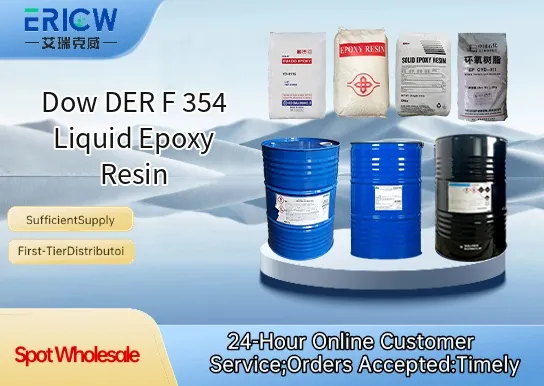
Low-viscosity, reactive liquid epoxy resin enabling excellent flow and wet-out in demanding formulations.
High epoxide equivalent weight (EEW) of approximately 185–195 g/eq, providing balanced reactivity and extended working life.
Excellent compatibility with common amine and anhydride curing agents for tailored thermal and mechanical performance.
Superior adhesion to metals, composites, and cured polymer substrates without requiring surface priming.
Consistent batch-to-batch quality meeting stringent Dow manufacturing controls and ISO-certified processes.
Aerospace composite matrix resins for primary and secondary structural components.
High-performance electrical encapsulants and potting compounds for power electronics and EV battery modules.
Structural adhesive formulations requiring elevated Tg and long-term durability under thermal cycling.
Wind turbine blade bonding and infusion resins where low viscosity and controlled gel time are critical.
Advanced tooling and mold-making systems for carbon fiber composite production.
| Chemical Type | Bisphenol-F based diglycidyl ether |
| Product Form | Clear to pale yellow liquid |
| Appearance | Homogeneous, low-viscosity liquid at 25°C |
| Epoxide Equivalent Weight (EEW) | 185–195 g/eq |
| Viscosity (25°C) | 12,000–16,000 cP |
| Chloride Content | ≤ 1,000 ppm |
| Primary Applications | Composite matrices, structural adhesives, electrical encapsulation |
| Key Features | Low viscosity, high purity, consistent reactivity, excellent adhesion |
Q1: What is the primary functional role of Dow DER F 354 in epoxy formulations?
A: Dow DER F 354 is a liquid bisphenol-F-based epoxy resin designed primarily as a reactive diluent and viscosity modifier. It reduces formulation viscosity without significantly compromising crosslink density or thermal performance, enabling improved processability in casting, potting, and coating applications.
Q2: How does Dow DER F 354 compare to bisphenol-A epoxy resins like DER 331 in terms of reactivity and flexibility?
A: Compared to standard bisphenol-A resins, Dow DER F 354 offers higher epoxide equivalent weight and lower viscosity, resulting in somewhat reduced reactivity with common amine hardeners—but it delivers enhanced flexibility and improved chemical resistance in the cured network due to its more flexible backbone structure.
Q3: Is Dow DER F 354 suitable for high-performance electrical encapsulation applications?
A: Yes—its low ionic impurity content, excellent dielectric properties, and ability to yield low-stress, low-shrinkage cured systems make it well-suited for electrical and electronic encapsulation, particularly where thermal cycling reliability and moisture resistance are critical.
Q4: Can Dow DER F 354 be blended with other epoxy resins or toughening agents?
A: Yes—it is fully miscible with most conventional liquid and solid bisphenol-A and bisphenol-F epoxy resins, as well as many reactive liquid rubbers and thermoplastic modifiers, allowing formulators to tailor mechanical performance, toughness, and processing behavior effectively.
Contact With Us:
E-mail: wangxingqiang@ericwchem.com
Have a Questions? Call Us:
Add:
Building A1, Jiete Industrial Park, Huangpu District, Guangzhou City, Guangdong Province, China