English
 Español
 tiếng việt
 русский
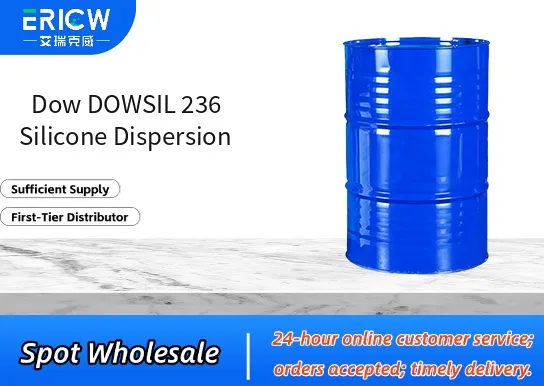
Water-based, non-ionic silicone dispersion offering excellent compatibility with waterborne systems.
Provides superior surface lubricity and slip enhancement without compromising film integrity.
Low foaming formulation designed for stable performance in high-shear mixing and spray applications.
Enables improved substrate wetting and uniform distribution in coatings and inks.
Non-yellowing and UV-stable, supporting long-term clarity and appearance retention.
Waterborne architectural and industrial coatings for enhanced mar resistance and leveling.
Flexographic and gravure printing inks to reduce friction and improve print quality.
Textile finishing agents for soft hand feel and durable hydrophobicity.
Wood coatings and varnishes to support scratch resistance and surface smoothness.
Adhesives and sealants where controlled surface migration and release properties are required.
| Chemical Type | Dimethicone-based silicone dispersion |
| Product Form | Opaque white liquid |
| Appearance | Homogeneous, low-viscosity dispersion |
| Active Content | 25–27 wt% silicone solids |
| pH (10% aqueous dilution) | 5.5–7.0 |
| Density (25°C) | Approx. 0.98–1.02 g/cm³ |
| Primary Applications | Surface modification in waterborne coatings, inks, and textiles |
| Key Features | Non-ionic, low foam, ready-to-use, no solvent required |
Q1: What is the primary function of DOWSIL 236 in coating and ink formulations?
A: DOWSIL 236 is a water-based silicone dispersion designed to provide surface modification benefits—including improved slip, mar resistance, and substrate wetting—without significantly affecting gloss or intercoat adhesion in aqueous systems.
Q2: Is DOWSIL 236 compatible with acrylic and polyurethane dispersions?
A: Yes, DOWSIL 236 is formulated for broad compatibility with common waterborne polymer systems, including acrylics, styrene-acrylics, and aliphatic polyurethane dispersions, though compatibility testing under specific formulation conditions is recommended.
Q3: How should DOWSIL 236 be incorporated into a formulation?
A: It is typically added during the let-down stage under low-shear mixing to preserve dispersion integrity. Pre-dilution with water or a compatible co-solvent may aid uniform incorporation, especially in high-viscosity systems.
Q4: Does DOWSIL 236 require post-application curing to develop its full performance?
A: No, performance benefits such as surface lubricity and leveling are realized upon film formation and drying at ambient or moderate thermal conditions—no additional crosslinking or heat activation is needed.
Contact With Us:
E-mail: wangxingqiang@ericwchem.com
Have a Questions? Call Us:
Add:
Building A1, Jiete Industrial Park, Huangpu District, Guangzhou City, Guangdong Province, China