English
 Español
 tiếng việt
 русский
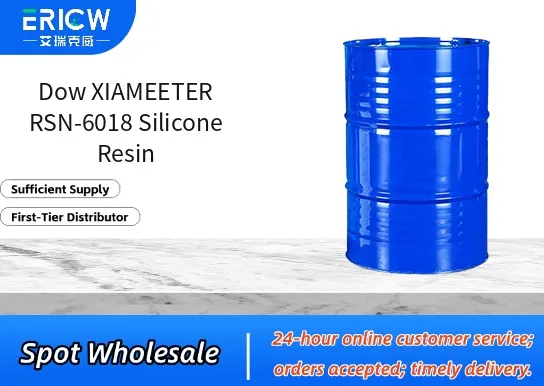
High thermal stability with continuous service temperature up to 200 °C.
Excellent electrical insulation properties, even under humid or high-voltage conditions.
Good compatibility with organic resins and silicone elastomers for hybrid formulation design.
Low viscosity liquid form enabling easy processing via spraying, dipping, or impregnation.
Self-crosslinking capability without requiring external catalysts under elevated temperature.
Electrical insulation coatings for transformers, busbars, and motor windings.
Heat-resistant binders in ceramic and refractory composites.
Matrix resin for high-performance composite laminates in aerospace and power electronics.
Surface treatment agent for enhancing hydrophobicity and dielectric strength of glass fiber fabrics.
Base resin for specialty release coatings on high-temperature industrial molds.
| Chemical Type | Phenyl-methyl silicone resin |
| Product Form | Clear, low-viscosity liquid |
| Appearance | Colorless to pale yellow, transparent |
| Primary Applications | High-temperature insulation, protective coatings, composite matrices |
| Key Features | Thermally stable, electrically insulating, self-crosslinking |
| Benefits | Extended service life in harsh thermal/electrical environments; simplified processing |
| Volatile Content (wt%) | ≤5% (per ASTM D2109) |
| Specific Gravity (25 °C) | 1.02–1.05 |
Q1: What is the primary function of Dow XIAMEETER RSN-6018 in coating formulations?
A: Dow XIAMEETER RSN-6018 is a methyl-phenyl silicone resin designed to enhance thermal stability, weather resistance, and surface hardness in high-performance coatings—particularly for industrial and protective applications where long-term durability under elevated temperatures or UV exposure is required.
Q2: Can RSN-6018 be used in solvent-based and high-solids systems?
A: Yes, RSN-6018 exhibits good compatibility with common organic solvents (e.g., xylene, mineral spirits, and aromatic hydrocarbons) and is suitable for both conventional solvent-borne and high-solids coating systems. It may require moderate heating or extended mixing to ensure complete dissolution and homogeneity.
Q3: How does RSN-6018 contribute to film formation and crosslinking behavior?
A: As a thermally curable resin, RSN-6018 participates in condensation reactions upon heating, forming a highly crosslinked siloxane network. This improves film integrity, chemical resistance, and dimensional stability—especially when blended with compatible resins such as alkyds, acrylics, or epoxy-modified systems.
Q4: Is RSN-6018 suitable for food-contact or pharmaceutical-related coatings?
A: Dow XIAMEETER RSN-6018 is not pre-qualified for direct food-contact or pharmaceutical applications. Its use in such regulated environments requires full formulation evaluation—including regulatory review, migration testing, and compliance verification by the end-user’s qualified safety and regulatory team.
Contact With Us:
E-mail: wangxingqiang@ericwchem.com
Have a Questions? Call Us:
Add:
Building A1, Jiete Industrial Park, Huangpu District, Guangzhou City, Guangdong Province, China